
Note: The original interview was conducted on March 24, 2011, at the FatChanceBellyDance® Studio, 670 S. Van Ness, San Francisco, CA. It was published on my dance journal blog, PinkCoinBelt Chronicles, as a five-part series that ran weekly from April 7, 2011.
The articles are republished below as a whole. Aside from fixing grammar and spelling mistakes, I preserve the old terminology since it reflects the time of publication.
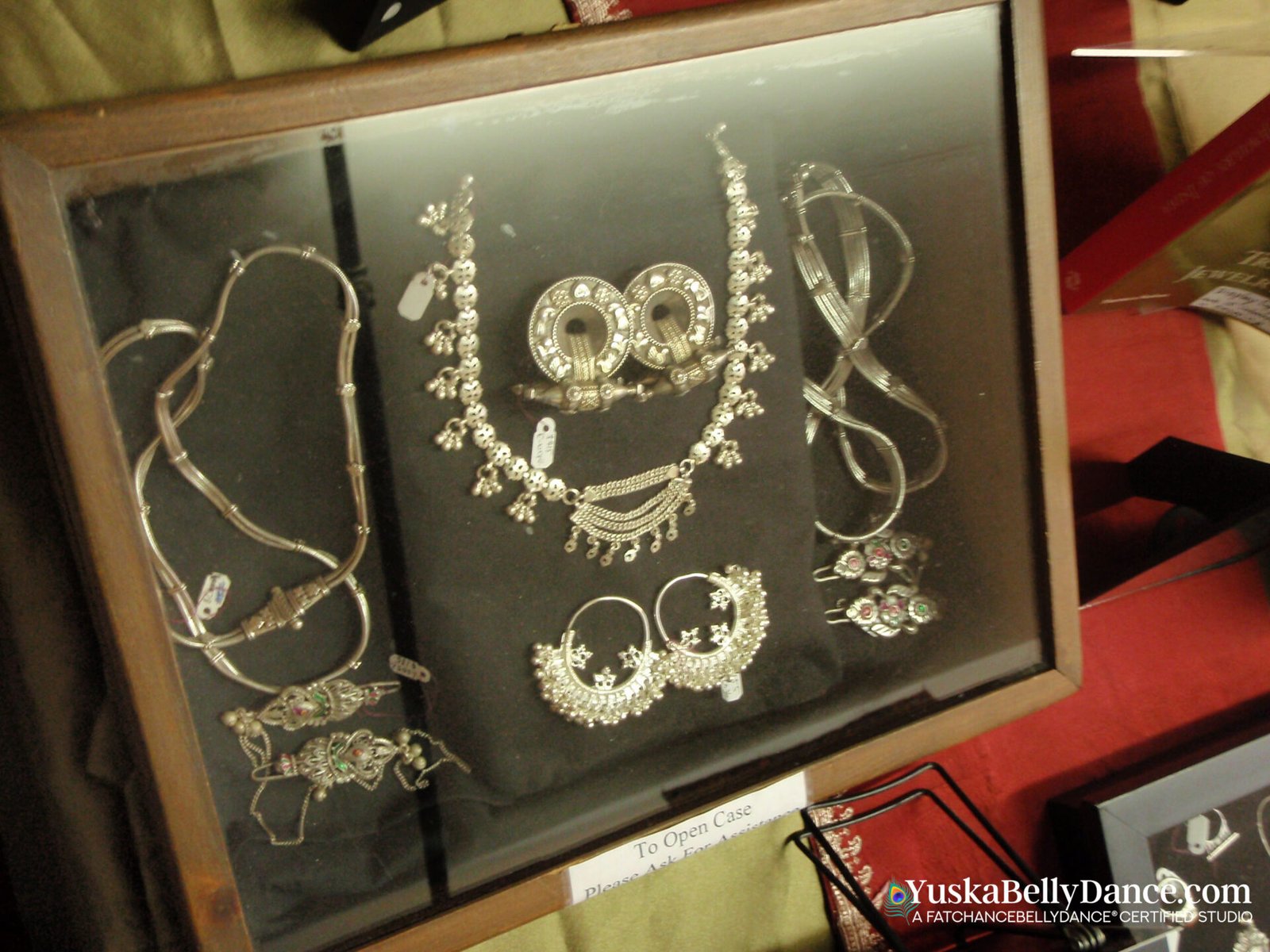
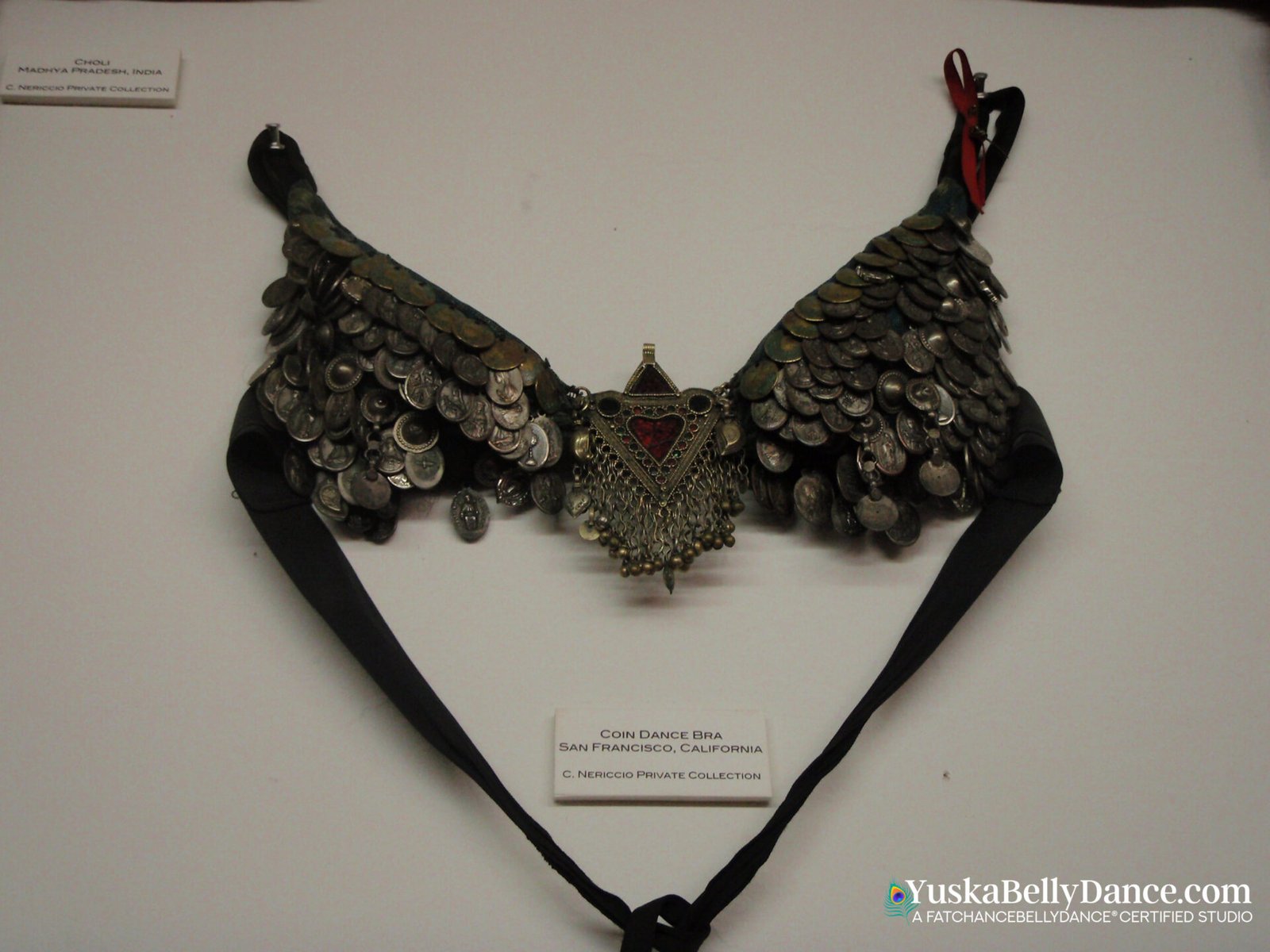
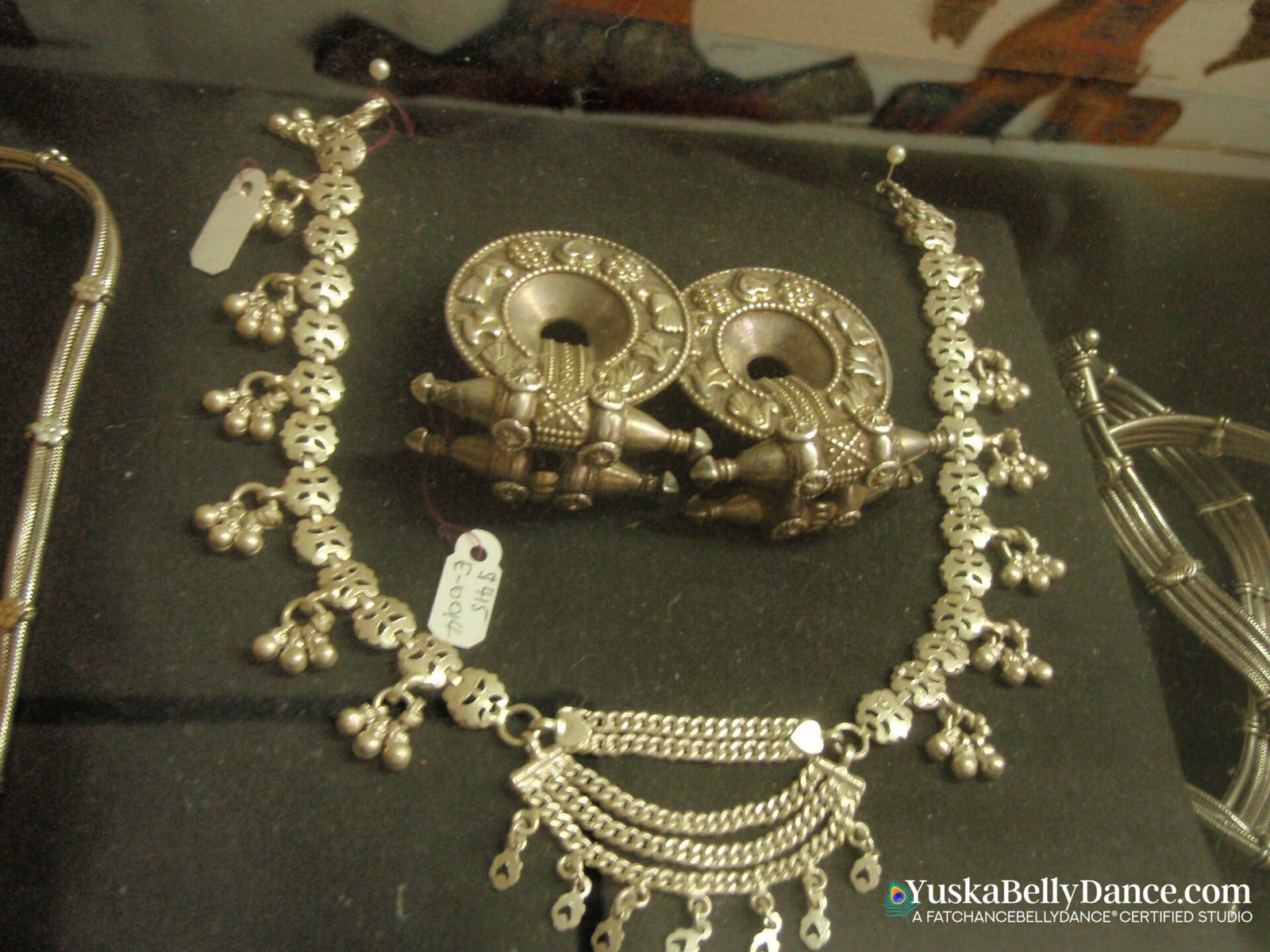
This republication also includes unpublished photos.
Introduction
Originally published on April 7, 2011, on PinkCoinBelt Chronicles.
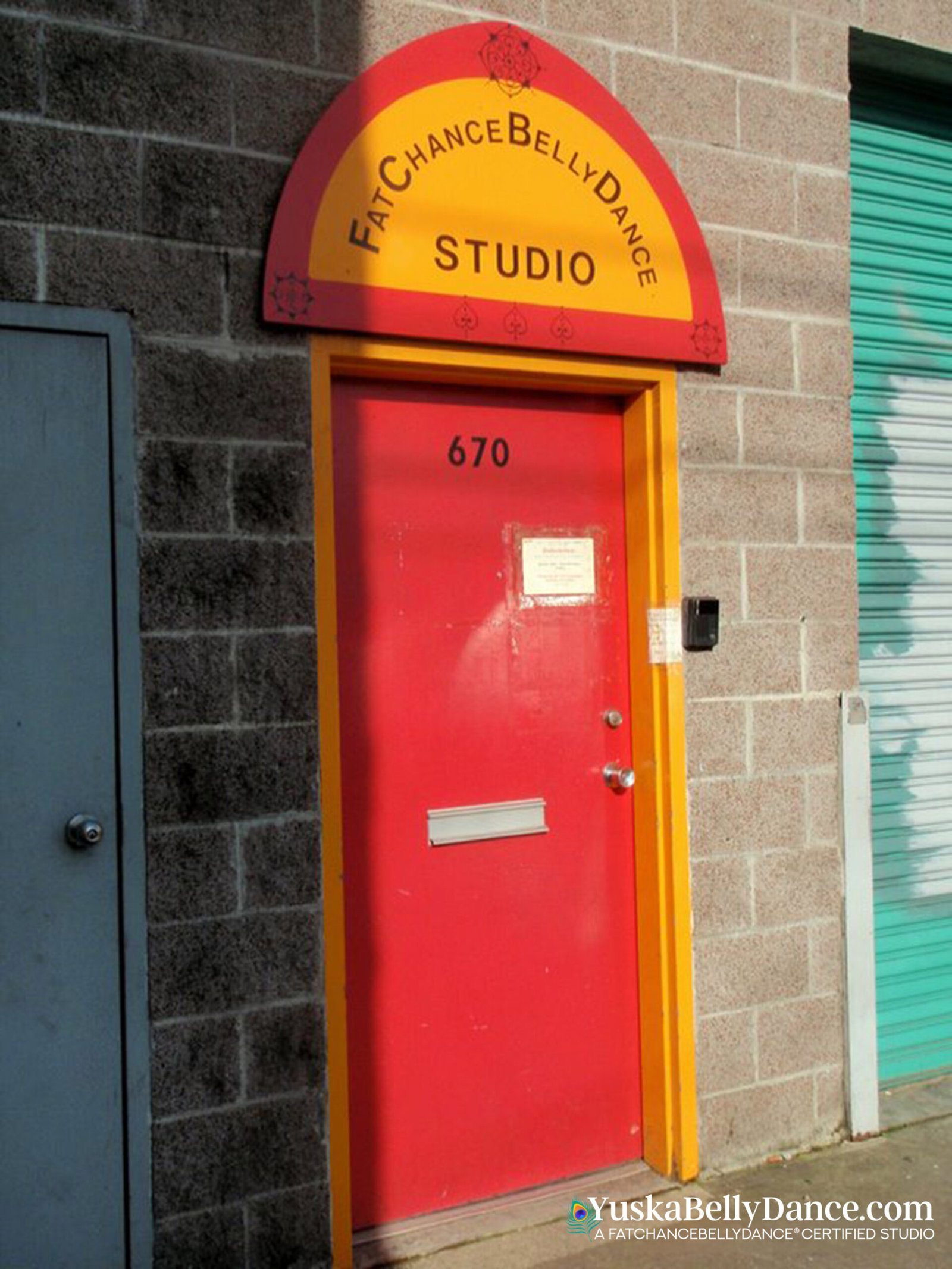
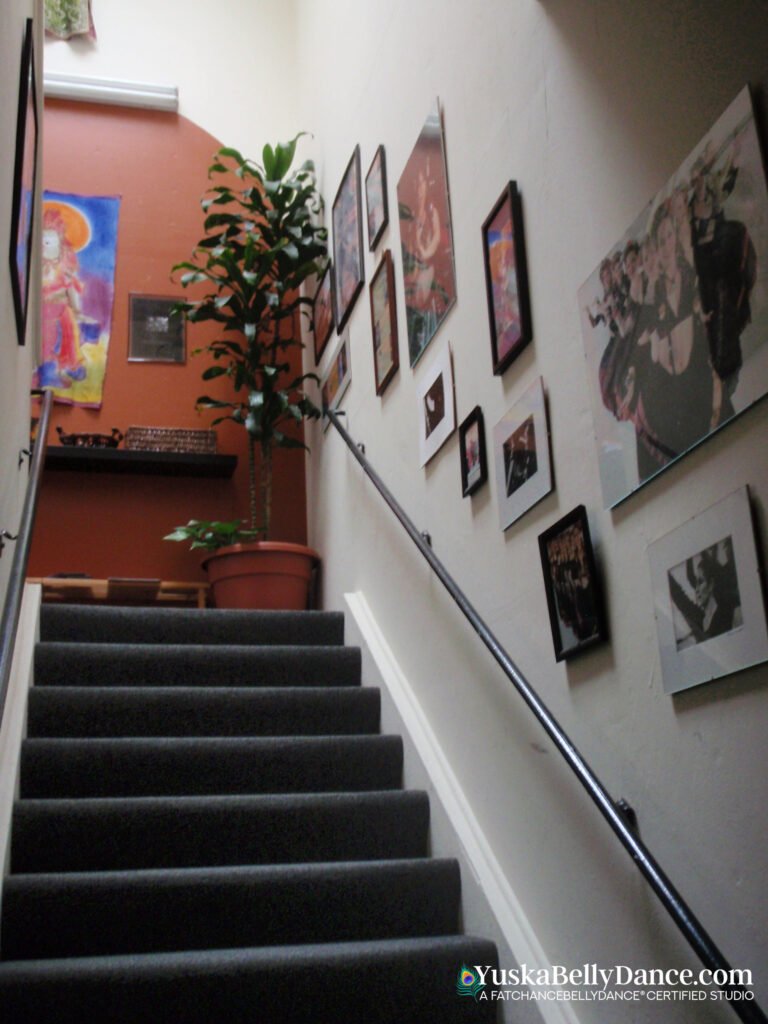
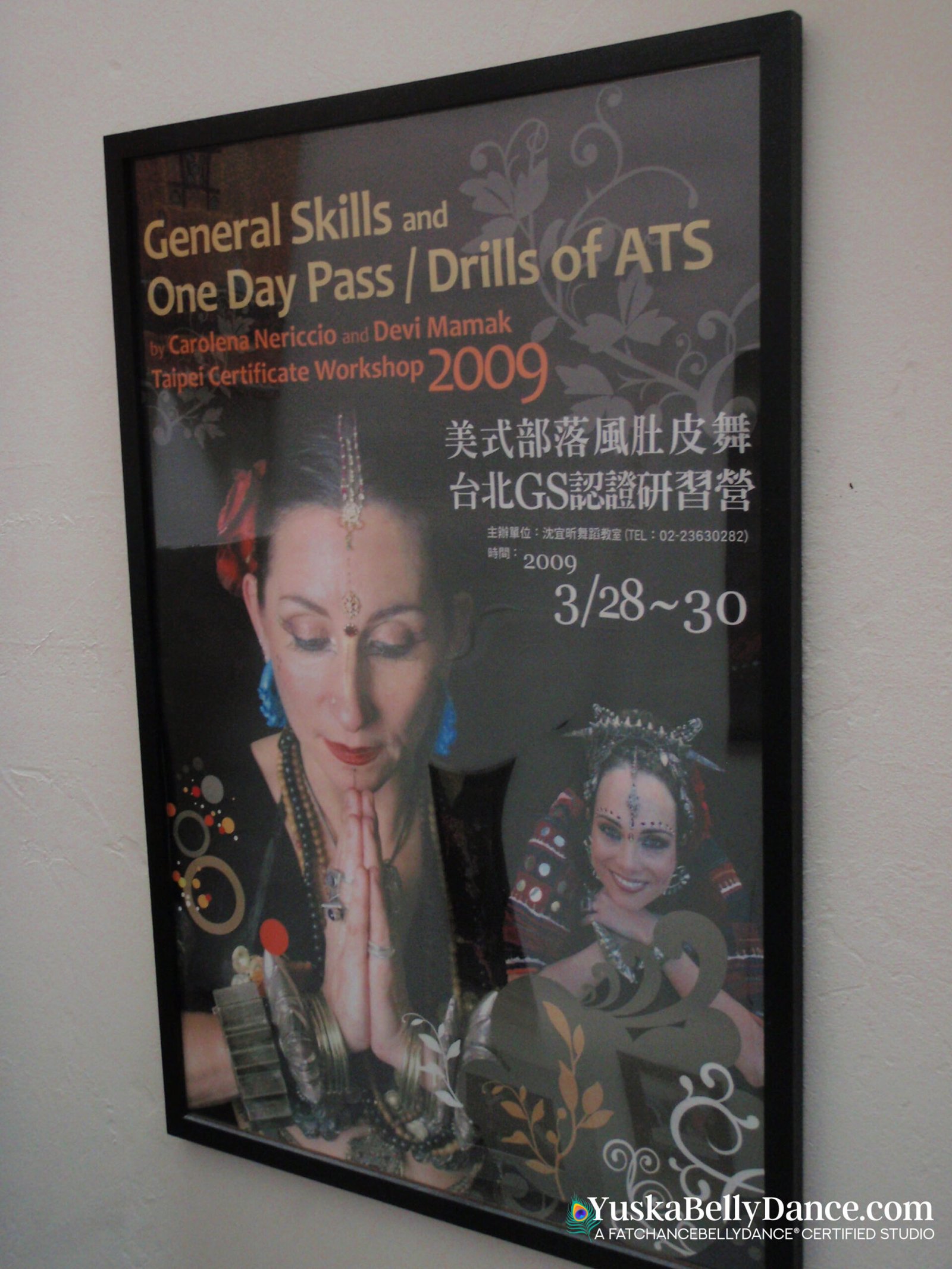
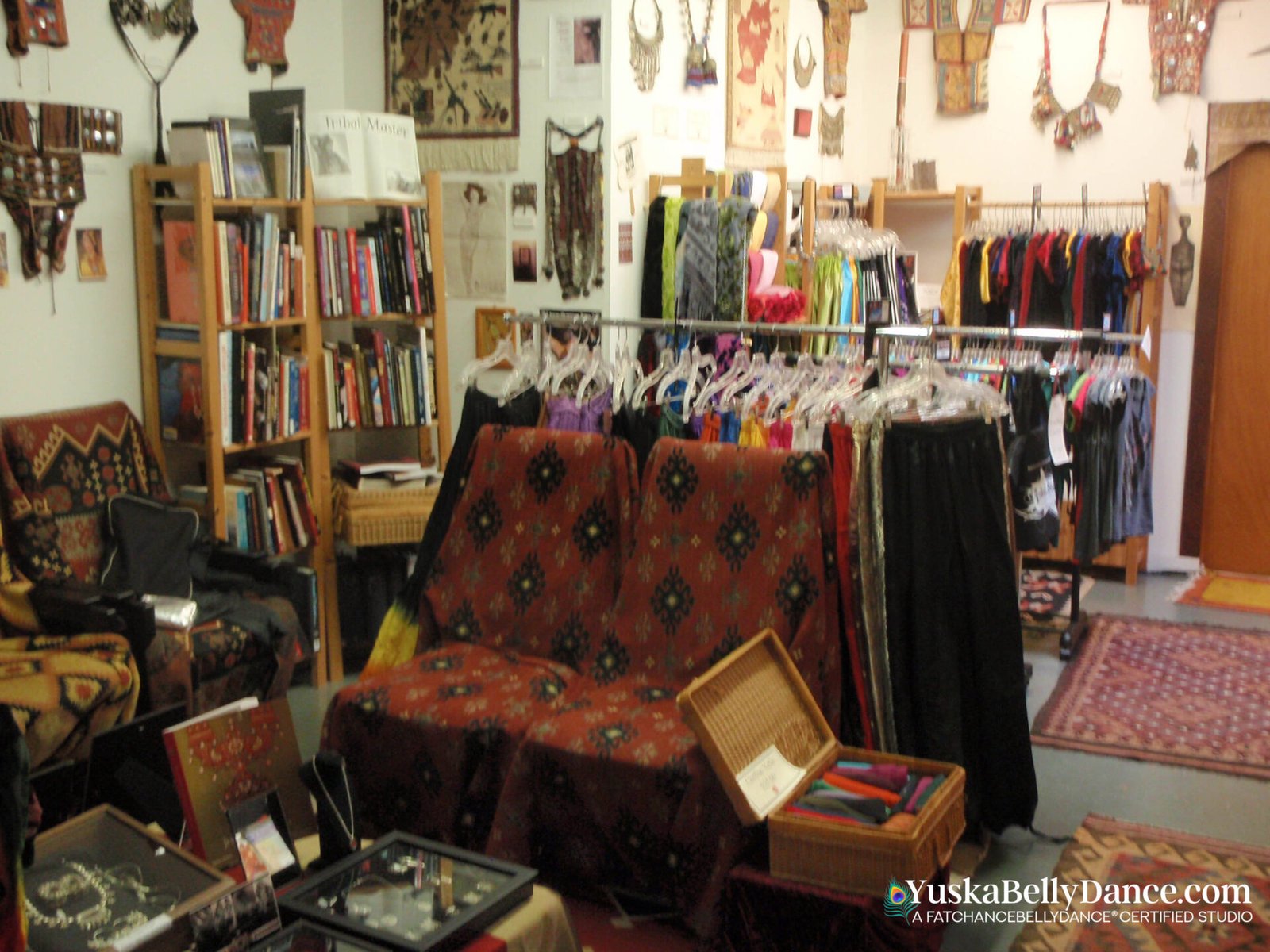
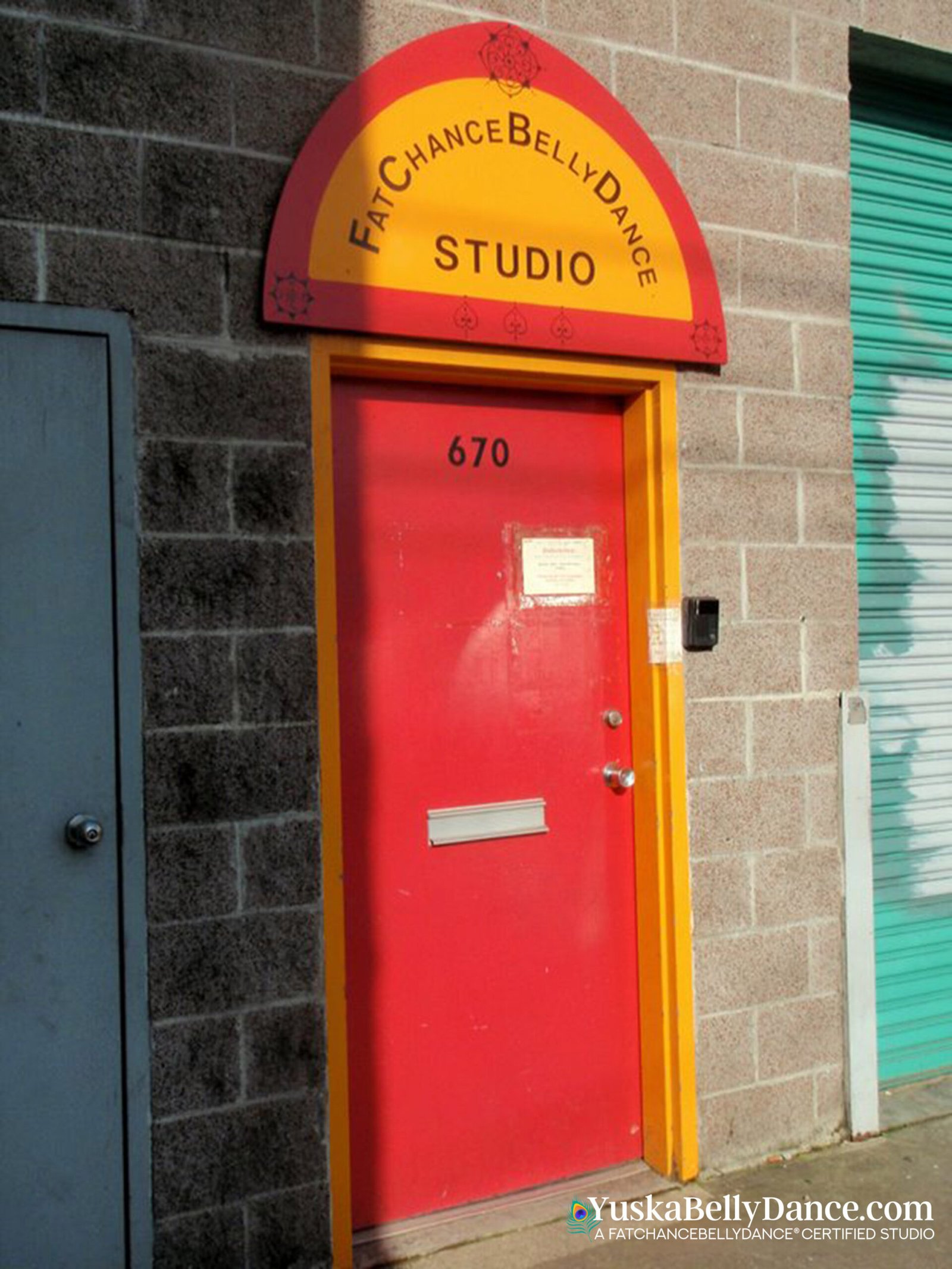
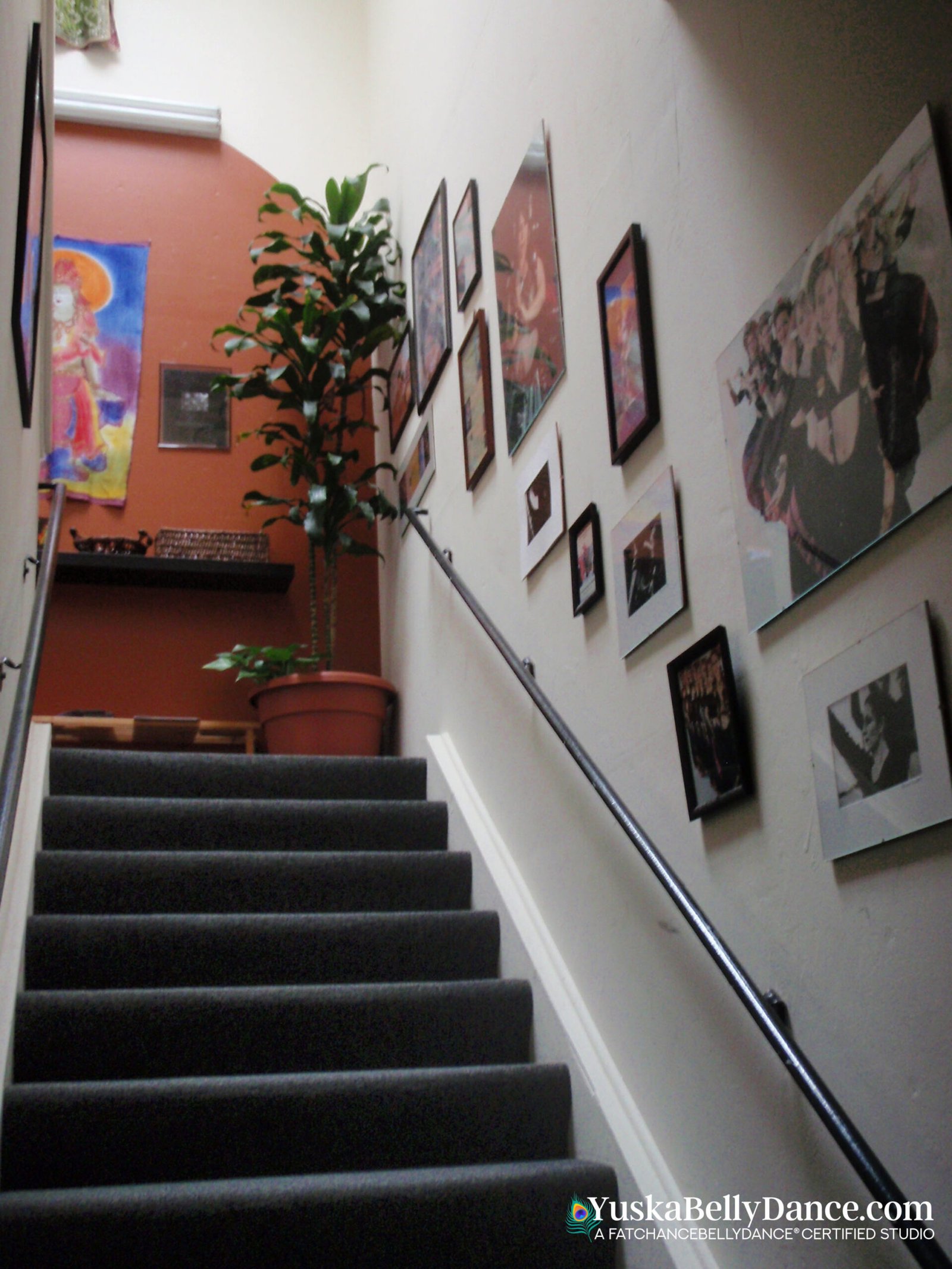
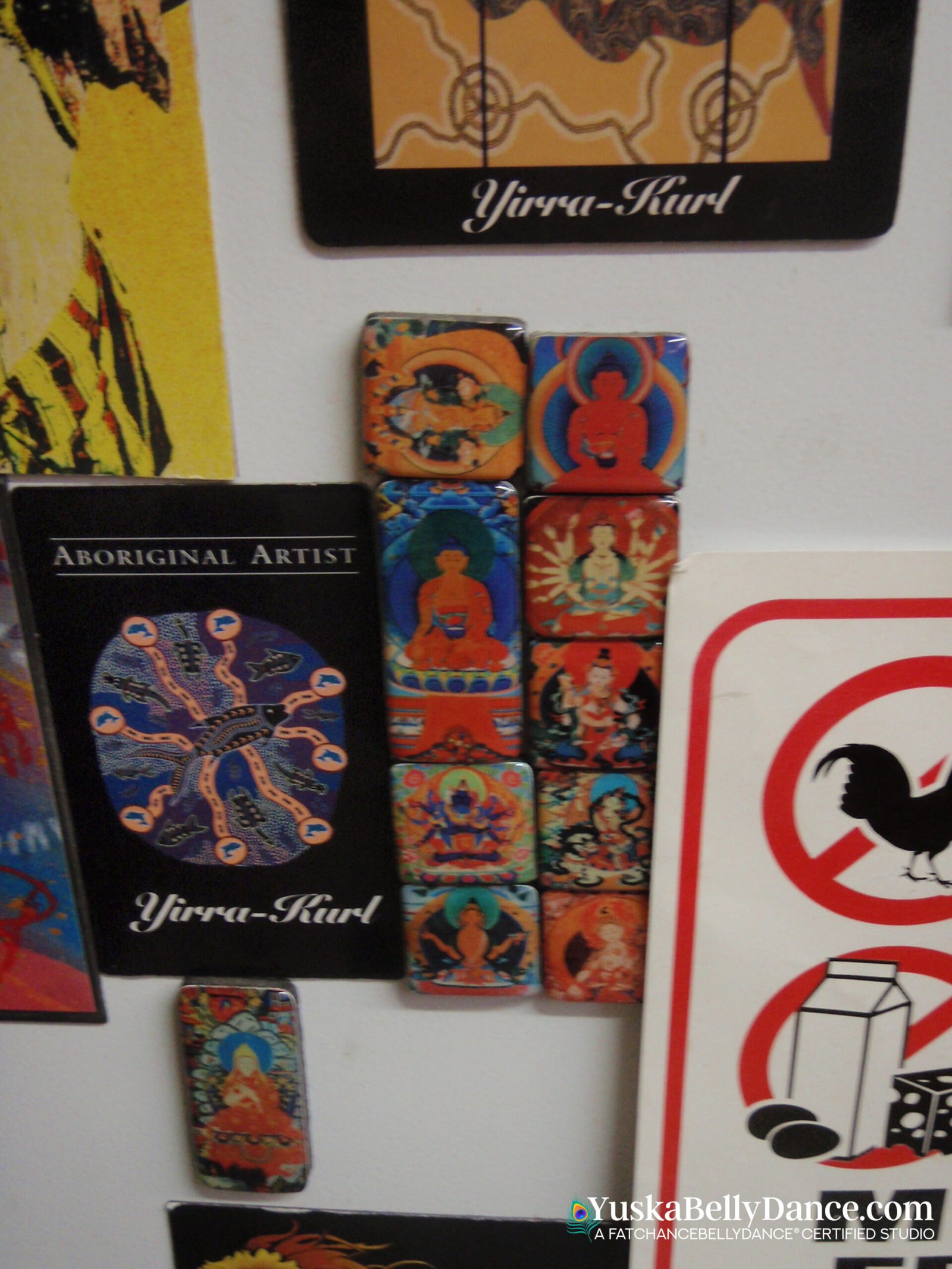
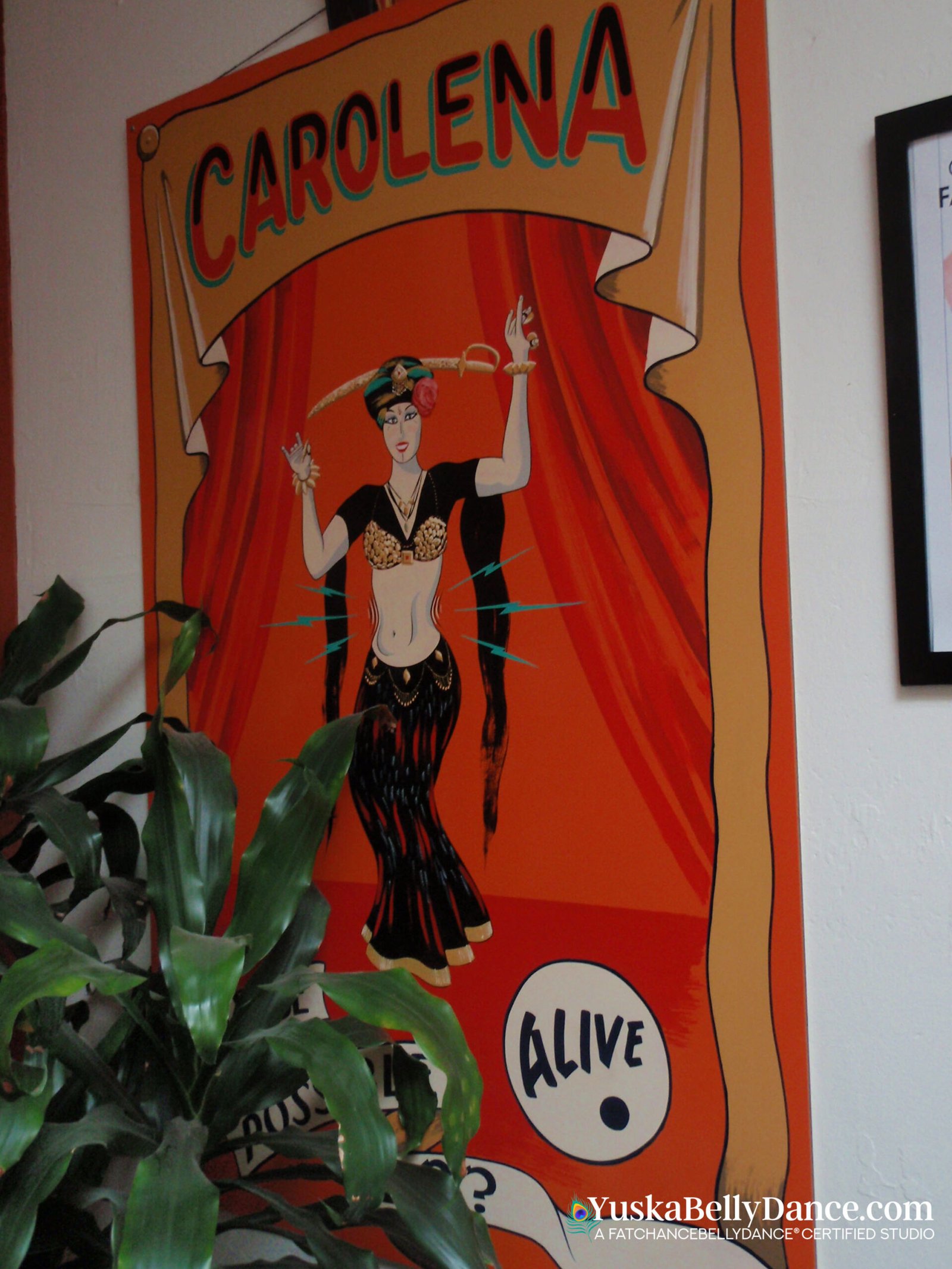
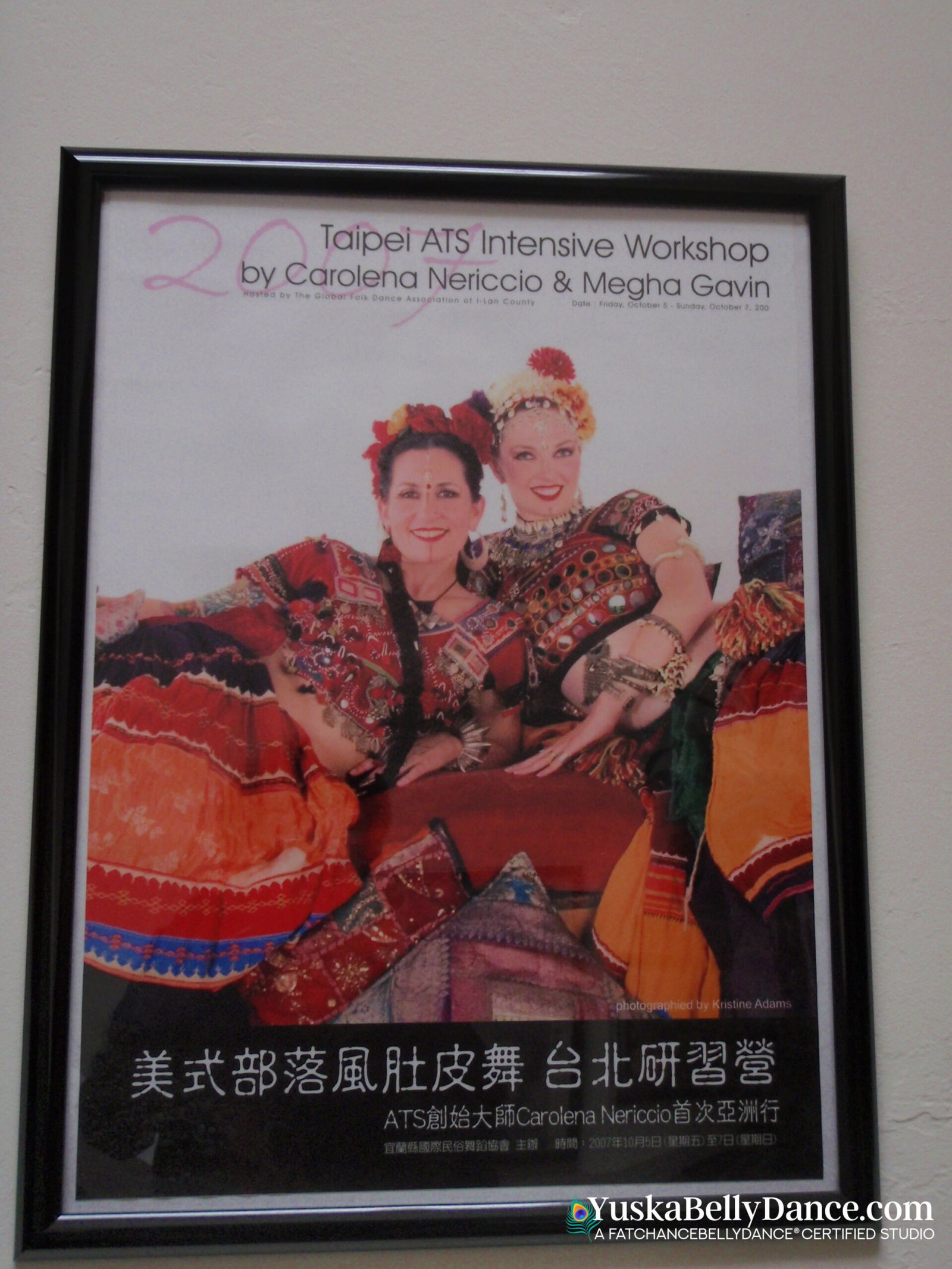
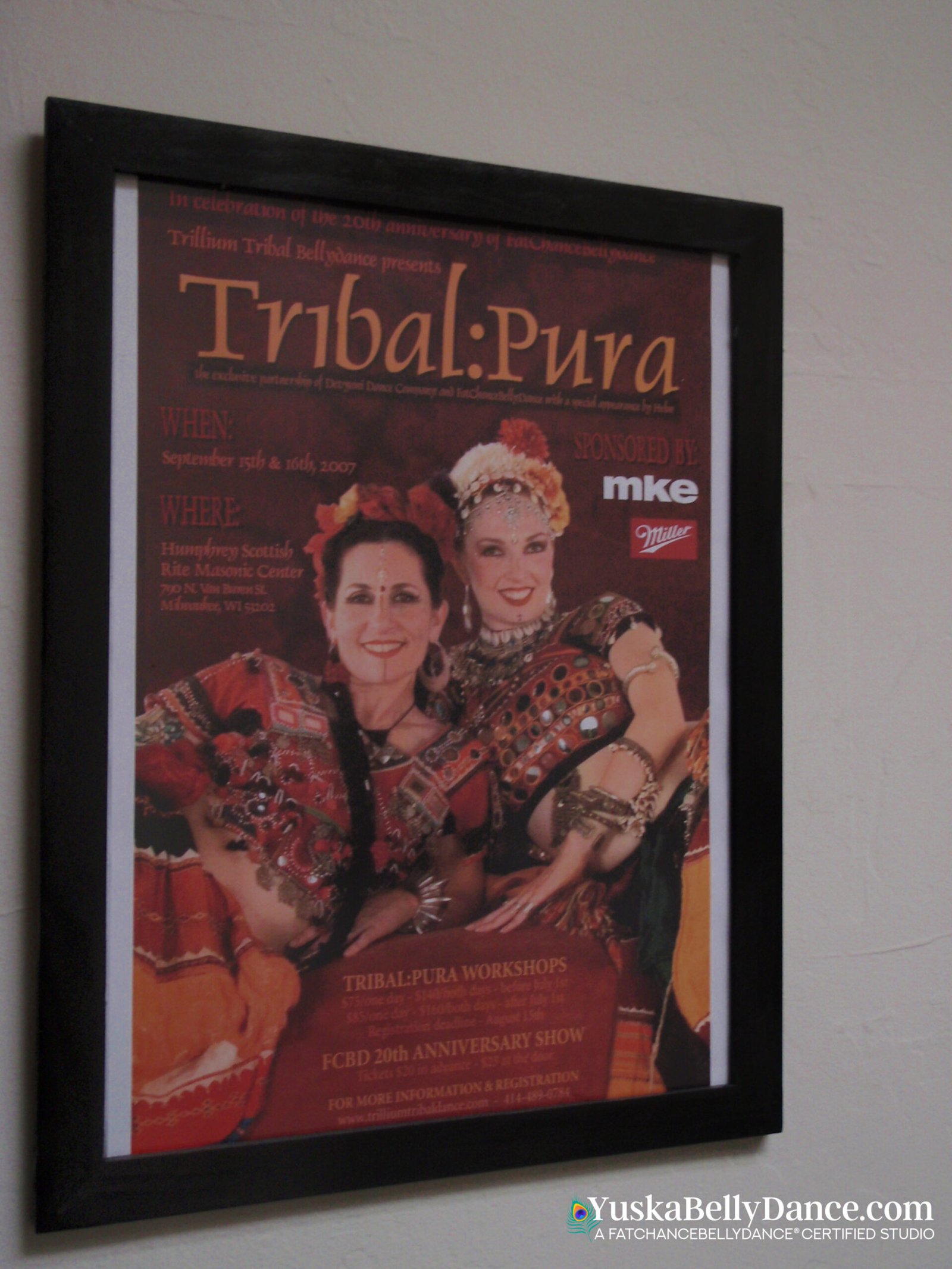
The FatChanceBellyDance (FCBD) Studio on South Van Ness, San Francisco, is the mecca and ultimate destination for Tribal style bellydancers. It is hard to miss the red door in front of the studio, with the name “FatChanceBellyDance” written in bold black letters. The first time I went through the door, I felt like Alice in Wonderland. Behind the door is a staircase leading to the second floor. Photographs, media clippings, and event posters in various languages grace the stairway wall. There’s a sense of warmth and serenity every time I climb my way up there, relishing the photographs and the posters, as well as brochures of events by or endorsed by FCBD. The climb is even rewarded with more eye candy: ornate and one-of-a-kind textiles and clothes, as well as drawings of the Goddess Quan-Yin.
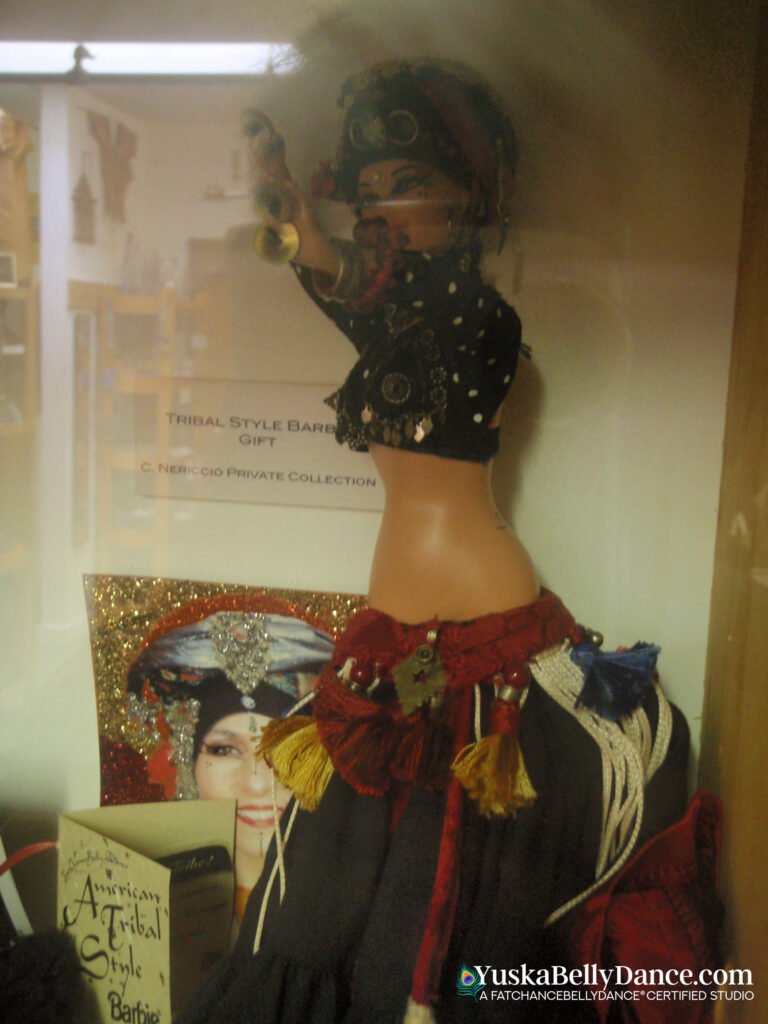
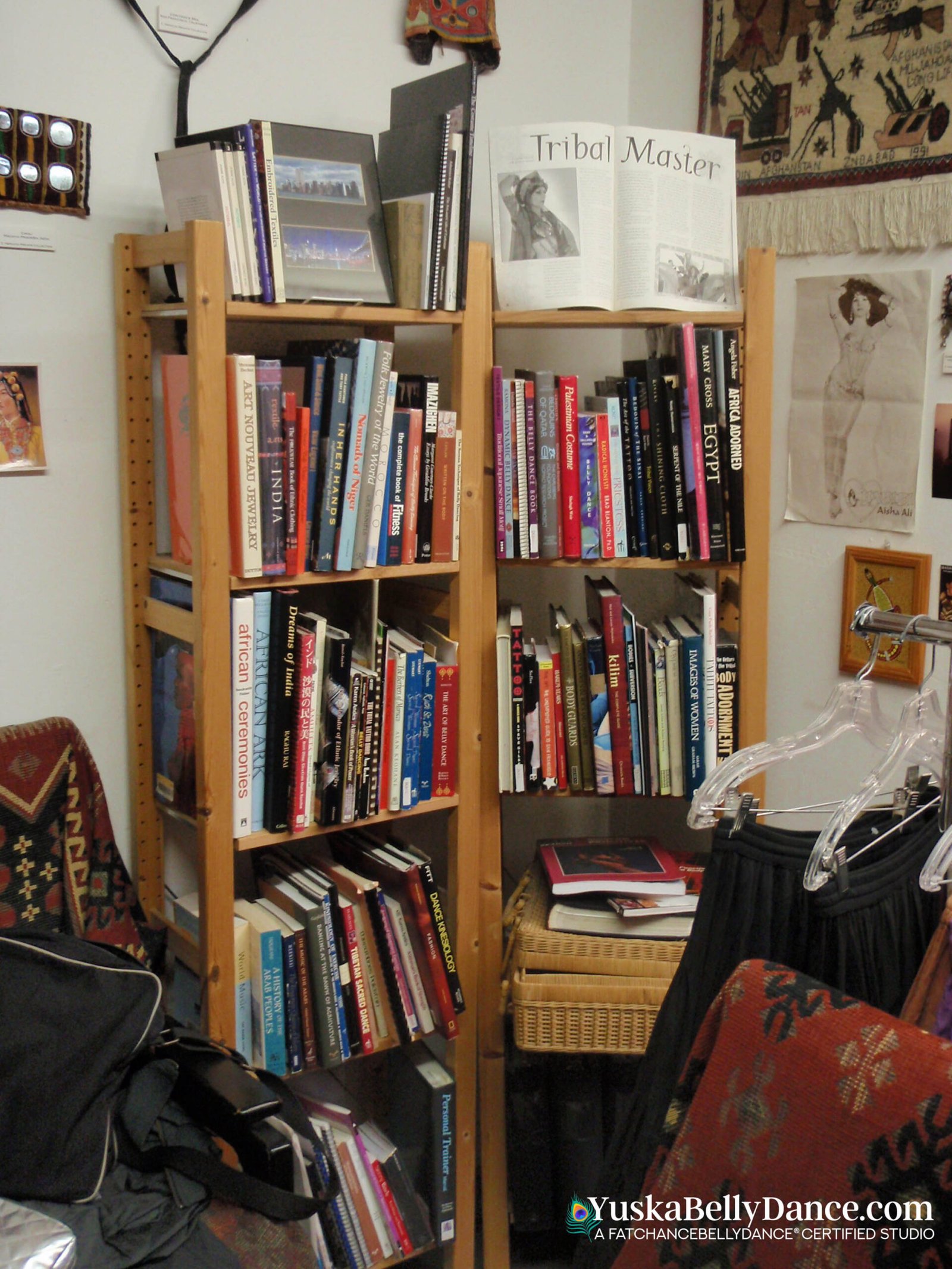
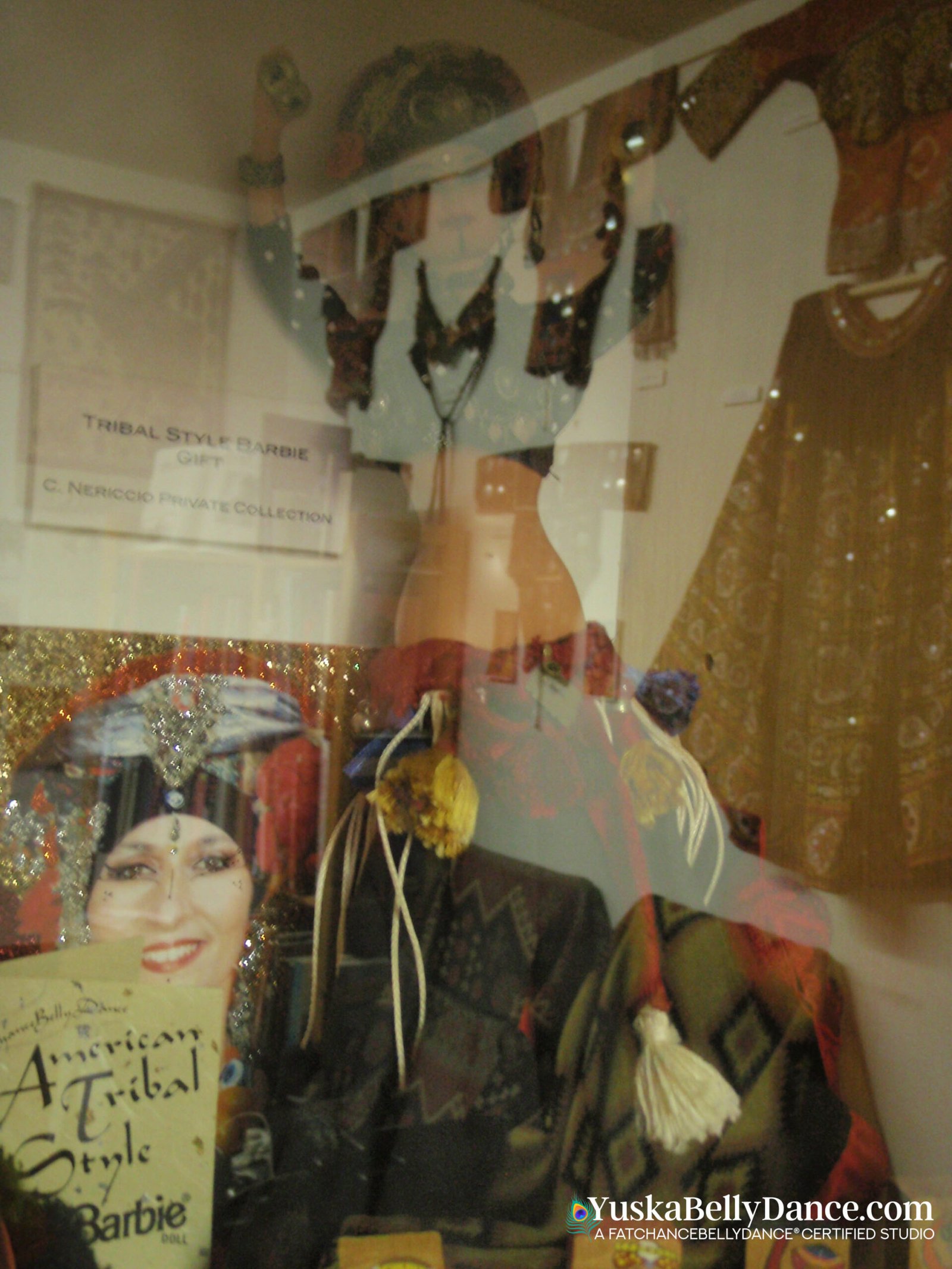
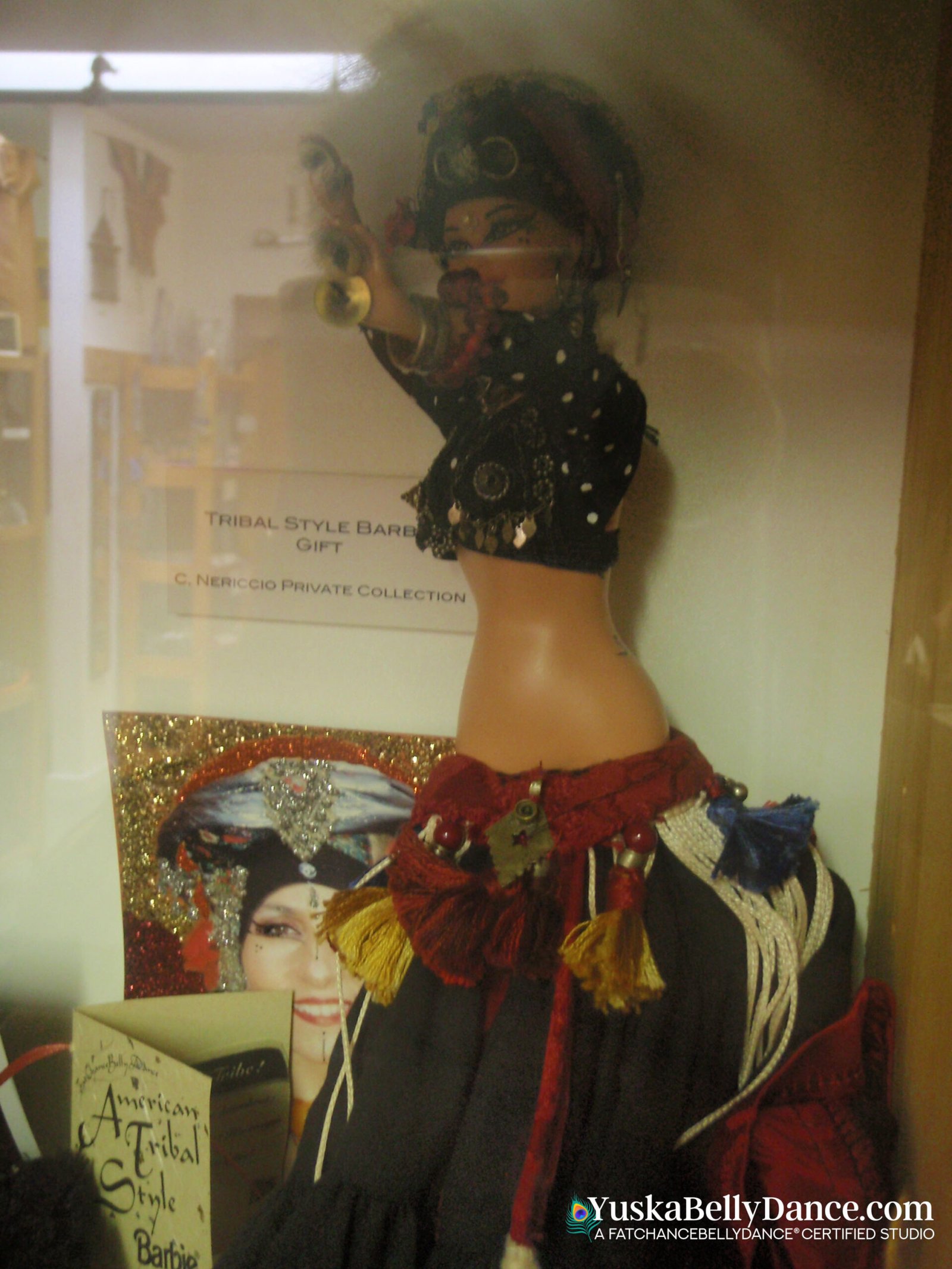
The staircase serves as a transition between the outside world and the ATS haven on the second floor: the office, the resource center, and the celebrated studio of FCBD. In this area, there are even more beautiful hangings, cute trinkets inside or outside the glass cases, and, to a bookworm’s (that’s me!) delight, countless resource books and references on women’s studies, body adornments and embellishments (both permanent and temporary), and dance.
I’ve claimed my little spot on the left of the bookshelf; there is only one changing room, so when it is occupied by the ladies, I put my bag on that little chair covered by woven fabric, and head over to the restroom to change. When I’m done changing, I just put my shoes and bag under the chair and off I go to the studio. Or if I still have time, I’ll grab a book and read.
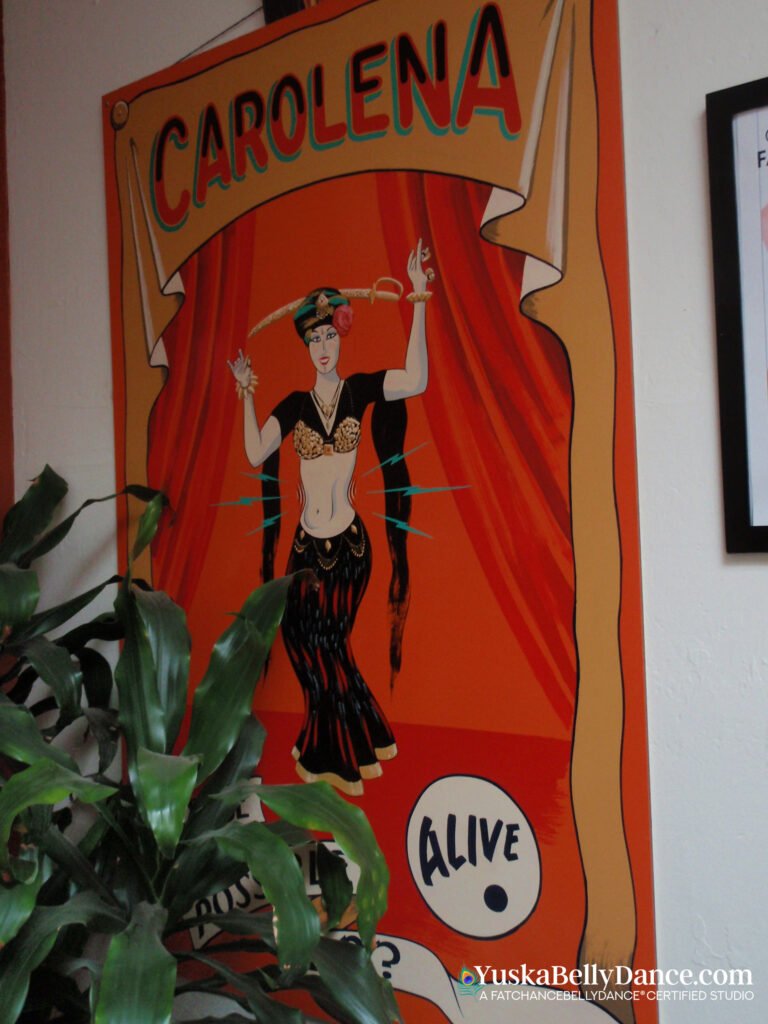
All of those things: the fabrics, the jewelry, the books, and most importantly, the dance, wouldn’t exist without Carolena Nericcio, the lady behind Tribal style, behind Tribal fusion, behind it all.
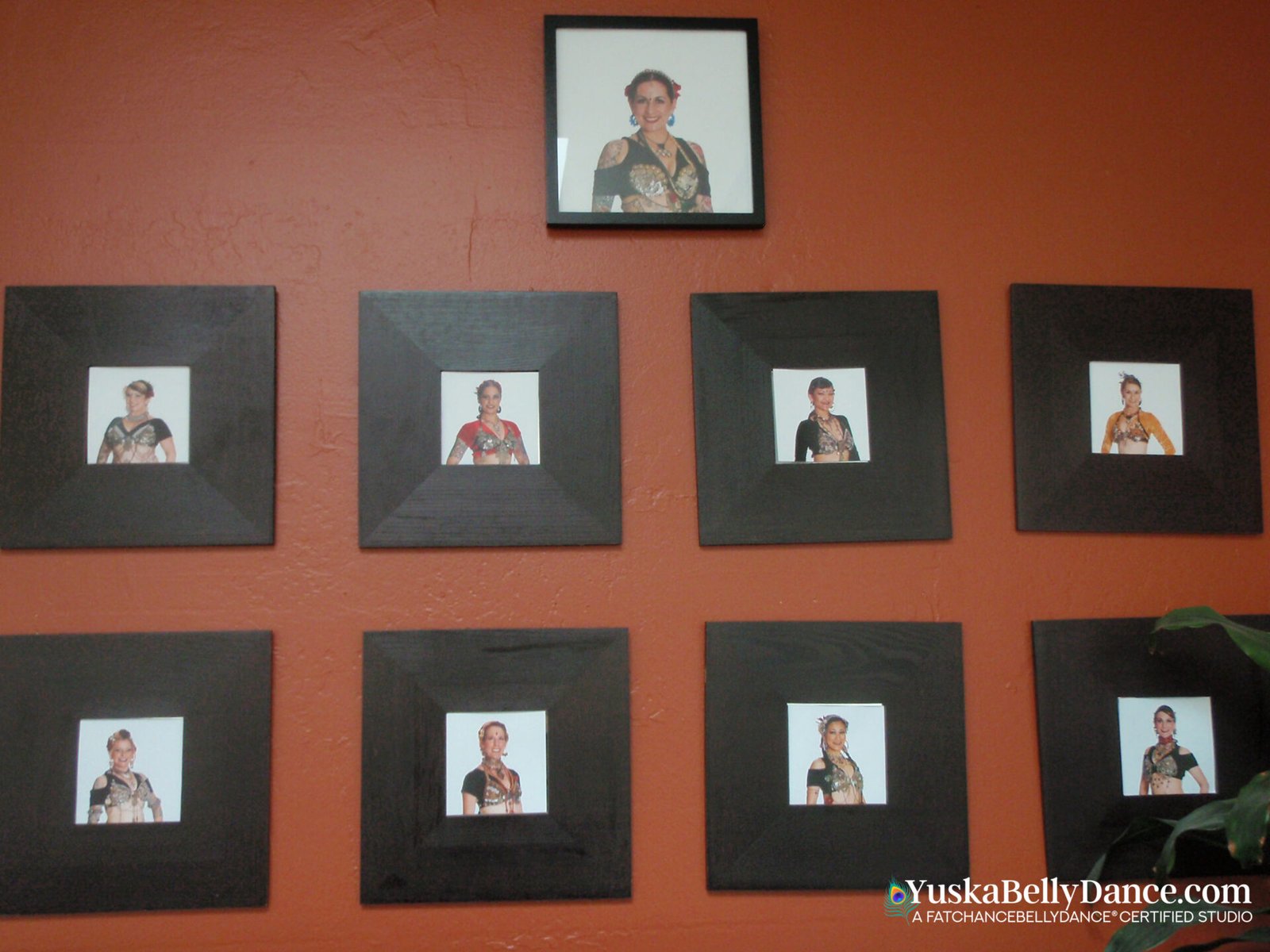
It began in 1974 when a young Carolena studied belly dance with the now renowned jewelry designer, Masha Archer. Masha blended Egyptian style with folkloric moves and other dances she found enticing. Carolena joined the SF Classic Dance Troupe, Masha’s dance company. When the troupe later disbanded, Carolena went to teach on her own. Based on the movements she learned from Masha (that Carolena held as the gospel truth in belly dance), she expanded her repertoire and in 1987 began performing with her own troupe, FatChanceBellyDance.
The uniqueness of this style, an eclectic blend of costume elements from the exotic worlds – Afghani, Kohistani, Persian, Indian, and the Middle East- gives the presentation an old look, although it is a new dance. Indeed, American Tribal Style (ATS), a nomenclature given by New York Oriental dancer Morocco, which Carolena has adapted to describe this art form, is a new dance style. But wait, there’s more than just the costumes.
“The philosophy of ATS is about leaders and followers dancing in a total improvisation setting, but seamlessly, as if choreographed. It is achievable by learning sets of slow movements and fast steps and the cue that precedes them,” Carolena said, explaining the “flock of birds” concept. This way, a group of people who have never met each other before and don’t speak the same language can perform ATS bellydance together.
It may sound like magic, but it actually is not. It is pure hard work and dedication. This dance form has suffered lashings from bellydancers (“the purists”), but it perseveres. This dance form has suffered lashings from its offspring (“the tribalists”), but it perseveres yet again. It has enchanted many dancers from around the world. Even non-English-speaking dancers know ATS.
In fact, Carolena was kind enough to squeeze this interview in her hectic schedule. She just came home from teaching General Skills and Teacher Trainings in England and was on her way to Seattle with her FCBD troupe to teach even more workshops and perform. In between teaching, the lady is a savvy and compassionate business person. The merchandise in her shop is to die for, and yet everything is vegan. Her latest business venture, the fine Tribal silver brand NakaRali – a collaboration with renowned dancer Colleena Shakti – has taken over the belly dance scene by a storm. The pieces in the collection are authentic jewelry made and worn by the local tribeswomen of India. With NakaRali, the world will be exposed to this fine art, thus helping the remote tribe gain more awareness and ultimately welfare.
In my little spot on the left of the bookshelf I sat with the recorder in my hand. In front of me was Carolena, poised to answer my eager questions. And so, here it is: our little interview on that rainy day on a Thursday afternoon.
Part 1: The Hard Questions
Originally published on April 14, 2011, on PinkCoinBelt Chronicles.
Yuska: Hi there!
Carolena Nericcio: Hello!
Let’s begin with the hardest ones first. Could you tell us the typical process of creating a movement? From the conceptualization until it’s out there in the ATS vocabulary.
Well, the core movements that you see in Tribal Basics volume 1 are the movements I learned from Masha Archer. Basically, for a movement to be admitted to the ATS vocabulary, everyone has to accept it first, in that it has to be doable. Because everyone has different bodies, it is important that the movement is created so that they complement to these different types of bodies. This also applies to the range of motion. Dancers must be able to do a move; otherwise, it will just get sidetracked because no one’s using it because no one can do it.

Most of the later movements are layering and expansion of the core movements. First you have the Egyptian [new name: Swivel Step] Basic, and then you have the Egyptian basic with half turn, with full turn, and with spins. Just like the Turkish Shimmy [new name: Forward Back Shimmy] that evolved to Turkish Shimmy with arms and turns, half turns, quarter turns, etc.
The core movements in Tribal Basics volumes 1 and 4 are now officially called “Classic ATS” while the movements in Tribal Basics volumes 7 and above are called “Modern ATS”.
Some of the movements evolved from a choreography, and then they just became cue-able. Some movements were created with a song in mind. The Sahra Turn, for example, was inspired by the song “Sahra” by Cheb Khaled.
Do you adopt other people’s moves?
Well, I’ve been doing business and tours with Megha (Gavin of Devyani Dance Company, Birmingham, AL) creating the show Tribal: Pura and she said she had some new steps to show you and so I said go ahead. And so, Tribal Basics volume 7 was born.
Partnerships like this will happen again in the near future. After this year’s Devotion show in June 2011, we will shoot a new DVD called Anatomy of Steps that will be released in the fall of 2011. The DVD will include new moves and steps from Megha, Devi Mamak (Ghawazi Caravan [now known as Caravan Dance Company], Australia), and Jennifer Nolan (Tamarind Tribal Belly Dance, Milwaukee, WI).
Tell me, what do I have to do to make sure I don’t get kicked out and banned from FCBD’s studio?
(Laughs). Show up on time, leave your baggage at the door, be open-minded, be in a good mood, allow your mood to be transformed, follow directions, be polite to the teacher and be helpful to other students, but don’t micromanage the others.
We really frown on people teaching when a teacher is teaching, and commenting when a teacher is presenting. What is planned for the day is whatever the teacher is planned for the day.
What do you think is the worst thing an ATS teacher could do?
I’d say that it probably has to do with what they say, not necessarily what they’re doing. If he or she is overly critical of other dance styles and says that other teachers are wrong, that’s really frowned upon. Also, if the teacher is overly critical of the students and doesn’t build a good rapport with the students,
A really good instructor, I think, would be magnanimous, confident, able to manage things as they come and go, creative, open-minded, all the while staying with the philosophy (of ATS). If a teacher has so much creativity within him or her that makes the teacher go completely off the ATS map, then ATS is not the right dance. Perhaps fusion will be more rewarding, because what makes ATS so great is the boundaries of this dance.
You’ve said that even when you’re doing your solo, it is considered as fusion.
Yes, because that is not ATS. To be able to do ATS, you need a leader and a follower. This is one of the boundaries of ATS.
What do you think is the worst thing that could happen to ATS?
The worst thing would be if the boundaries of ATS were lost and became a blur by being taken away so off the ATS track and that we lost the essence of happiness in dance itself.
Part 2: The 24/7
Originally published on April 21, 2011, on PinkCoinBelt Chronicles.
Okay! Now that the hard part is out of the way, it’s time to do something fun! Tell me, where was the first FCBD studio?
Ah! The first studio was in Noe Valley Ministry, that’s a Presbyterian Church in the Noe Valley Neighborhood of San Francisco. There was a gym on the upper floor that got converted into a dance studio
I also rented Mahea Uchiyama’s studio in Berkeley once a week for several years. We also rented the Mahea’s studio to shoot Tribal Basics volume 1.
Tribal Basics volumes 5 and 6 were shot in two places, actually: at World Gym in the Potrero Hill Neighborhood, and Mahea’s Studio for the performance.
And then, we finally moved here to South Van Ness.
You’ve been in the business since 1987, that makes it more than twenty years.
24 years.
Right, sorry. My math is awful. So what keeps you relentless and perseverant? What keeps motivating you in doing ATS?
I feel like I was given this dance (by the Goddess Quan-Yin) and that it’s my job to move it forward. I just wake up every day and feel that there’s always something else to do. So there’s really no need for motivation.
However, every now and then, there is this debilitating feeling of not wanting to go, but it’s more because of what people say.
Fifteen years ago, when Fusion was the thing and everyone was learning fusion with different styles of Tribal, I was like, “What are they doing?” And people were nasty to each other and it wasn’t fun or conducive for the dance. So, I felt deflated because of that, and I just thought of quitting.
When we moved to the studio, as much as I loved finally being in the studio, we had been part of the underground movement and then we became above ground and our clientele changed. So the switch was just strange.
Then I realized I had to start traveling because that way the inspiration comes. I just couldn’t stay in San Francisco and watch the haywire. And then you know how it’s hard to find a home for The Devotion show and you lose money over it because there’s just no way that the ticket sales can make up the cost of the production. (During the February 2011 General Skills Training, Carolena told us that they were still looking for a place for the June 2011 Devotion Show – they’ve found a place for this year’s show, though. It’s the Julia Morgan Theatre in Berkeley, CA)
Things like that can be a drag. And usually stuff like that is the result of people’s attitude.
But I guess what motivates me is the idea of happiness that ATS brings. It has brought so much joy to the lives of so many people. I feel the need to share the dance. The dance itself is fabulous. But as soon as people start to open their mouths…
Right. I completely agree. Now, I guess you’ve never been tempted to leave ATS to pursue other dance forms or add a dance form to your repertoire?
Well, I’ve learned Kathak, Bharatanatyam and Flamenco, and I feel that I have to give up ATS altogether to pursue these dances and I won’t do that. These dances are there to always inspire me and inspire ATS moves. I enjoyed learning them, but I’m sticking to ATS.

Part 3: The Intimate Details
Originally published on April 28, 2011, on PinkCoinBelt Chronicles.
Okay. Now let’s invade your privacy a bit and question these things. The first one is: Why did you become a vegan?
I have always been concerned about the treatment of animals. Ever since I was young, I just couldn’t eat anything shaped like a body part of an animal. The meat has to be cooked just so it isn’t recognizable. One time when I went to Greece to visit our family there, they had a big feast for us. And on the table was the lamb I had just spoken to a few hours earlier, slaughtered and cooked. I told myself there was no way I was going to eat it.
I was seven years old when I told my mother that I was going to be a vegetarian. I was walking, and I saw a man hacking a frozen animal. I told my mother I was going to be a vegetarian and she said I was going to die. At that moment, both of us didn’t realize that it was true, so I said, “Okay, if you want to cook me meat, make sure it’s not recognizable.” And I was very difficult about that.
At fourteen, I decided to really become a vegetarian. And Mom even went to a doctor to see if I was going to die and the doctor said no, there are people who don’t eat meat in their diet and they’re fine. So I became one.
At that moment, I knew that I was going to be a vegan but I didn’t know that such thing existed. I didn’t know that cheese and egg contributed to the killing of animals, so cheese and egg were always the go-to food. It was only eight years ago that I decided I was going to be a vegan. And by being one, I felt that I could look at the world straight in the eye and say I’m not participating in the poor treatment people give to animals.
Carolena’s commitment to veganism is reflected not only in the merchandise in the FCBD store, but also in the little refrigerator she shares in the studio: it is a completely no-meat environment. Carolena even convinced Wild Card (an American fashion company) to make a vegan based line to be sold in the FCBD store. And there’s no silk hip scarf to be found in sight. Nope. Just gorgeous, viscose and cotton fringe scarves.

Do you think your being vegan has inspired many bellydancers, particularly the Tribal dancers?
Well, I’d like to say that, but I think it’s also more to the fact that people heard about my being vegan and just asked how I did that. So they asked me questions and I answered whatever I can.
One time when I was teaching in Milwaukee, I met the husband of the organizer. When we met me for the first time, he was a die-hard meat eater. At the end of the workshop, he became a vegetarian, and a week later, he became vegan.
Wow! That’s fascinating! Does being a Buddhist have to do with you being vegan? When did you become a Buddhist?
I didn’t really become one. I was being a vegetarian at that time and was researching for religions that specifically forbid the eating of meat. And it turned out that only Jainism teaches that and if I were to be a Jain, I would need to let go my current lifestyle and I can’t do that. All religions teach meat eating as optional, but I think Buddhism is the only one that says it is better for you not to eat meat because it’s going to be much better for the karma.
So, one time I visited a temple here and I asked a monk if I had to go through a ceremony to become a Buddhist and he said no. And I said, “Oh, okay, because I felt completely peaceful here (in the temple),” and the monk said, “Well congratulations then! You’re a Buddhist!” And so I phoned my Mom and said, “Mom, guess what? I’m a Buddhist!”

My mom is just the type of person who’ll ask me what I’m into or I’m doing so that she could try it too and experience it with me. She’s not religious but when she learned what Buddhism is, she said she liked the philosophy of Buddhism. She even referred to the Dalai Lama as her boyfriend because she loves him so much and he has changed and taught her so many things, including patience.
Was this when you discover the Goddess Quan-Yin?
Well, I’m a Tibetan Buddhist and the Goddess lives in Chinese Buddhism belief. For Quan-Yin, I believe that I’ve known her even before Buddhism. There was a picture of her silhouette given to me by my roommate at a time and I thought it was the most beautiful thing ever.
I didn’t know that there were so many interpretations, paintings and statues of the Goddess. So I figured out that the way not to lose the picture was to tattoo it on my body. At first, I was going to do it only as an outline because that was the only way I knew of the image. But my tattoo artist said that we had to fill it. So people started giving me pictures of Quan-Yin and I realized that there were many interpretations of this goddess.
Alright. Now, when we were doing the General Skills and Teacher Trainings 1 & 2, you sat there, knitting away, all the while listening and responding to our queries without skipping a beat. How did you get into knitting?
Well, after design schools and lots of sewing, I wanted to learn to weave, so when I asked a friend who was a fashion designer if I could try to weave, she let me give it a try, but then said, “Ummm… You should stick to sewing.” I wanted to weave but she helped me realize I was too slow for that. Later, I found out that I had to do something when I’m flying (to teach workshops), and so I took up knitting. At first it was so overwhelming that I gave it up. But then I took up crocheting, and once I got the hang of it, I got back to knitting again, and here I am.
The thing about knitting is that it’s portable and I can do it anywhere. When flying, take the bamboo sticks with the rounded point. The metal ones just won’t work with the security protocol.
Do you have a piece you’re really proud of?
My biological clock has switched ON now. At first it said “experiment”, now it says “produce”. I’m making Stump Socks for Amputees with the Granny Peace Brigade, and Beanies for Servicemen and Servicewomen with Operation Beanie. I’m currently knitting a vest for myself, but this one can wait. I feel the need to create something that has social value with knitting, and it helps with the feeling of helplessness.
I converted my living room into a textile studio with two sewing machines, a loom, and a spinning wheel. But I can’t take those things with me, so I carry my knitting when I travel.

Part 4: The Love
Originally published on May 5, 2011, on PinkCoinBelt Chronicles.
Could you tell me the Fast Step and Slow Move that you love most from ATS? It doesn’t have to be your favorite, though, but the one that you most often use.
The Egyptian Basic [Swivel Step]. The step is just so big and gorgeous and it’s good for all body types. It fits right into the beat of the song. For the slow movement, I think it’s the hand floreos because they just complement nicely to the slow movements like the Taxeem, Bodywave, and Circle Step.
What do you think is the most gratifying aspect of performing?
Being able to entertain the audience – it was only until recently, during the second Taiwan trip in 2008 that I discovered to just let everything go and have fun on the stage. I used to resent the audience and the idea of me having to entertain them. So, my conscience and I decided to have a talk. I had lots of moments when my Self and I would say, “Let’s have a talk because this thing isn’t working.”
One time, my Self told me to let everything go when I’m performing. I used to think that when people came up to me and ask where I bought my choli or what music I danced to, people weren’t paying attention to me, but to what I wear and the song I dance to. My Self said, “That’s right!” So, at that moment, I decided to just dance and I was so into it.
At the end of the performance, I was there, with people taking hundreds of photos with me. I used to dislike people taking photos of me because I felt they were stealing a bit of my soul, but I realized this made them happy. So I just stood there until everyone was gone, still smiling, asking if everyone’s sure they don’t want to have another photo with me.
And what do you think is the most gratifying aspect of teaching?
It is so good to have that lightbulb experience and lightbulb look on the faces of the students. It’s so good to know that they can connect to what you are teaching.
It doesn’t have to be in the class or about a move you’re currently teaching, but it can also be about the body image. Some people who are really conservative could put on a costume and just have that lightbulb moment when they feel that it is just natural for them to bare their stomach and dance in something that could be too revealing for most people.
This one might be a hard one. Can you point out the things that you love most in the dance studio, in the bookshelves (the resource center), and the goods that aren’t the merchandise?
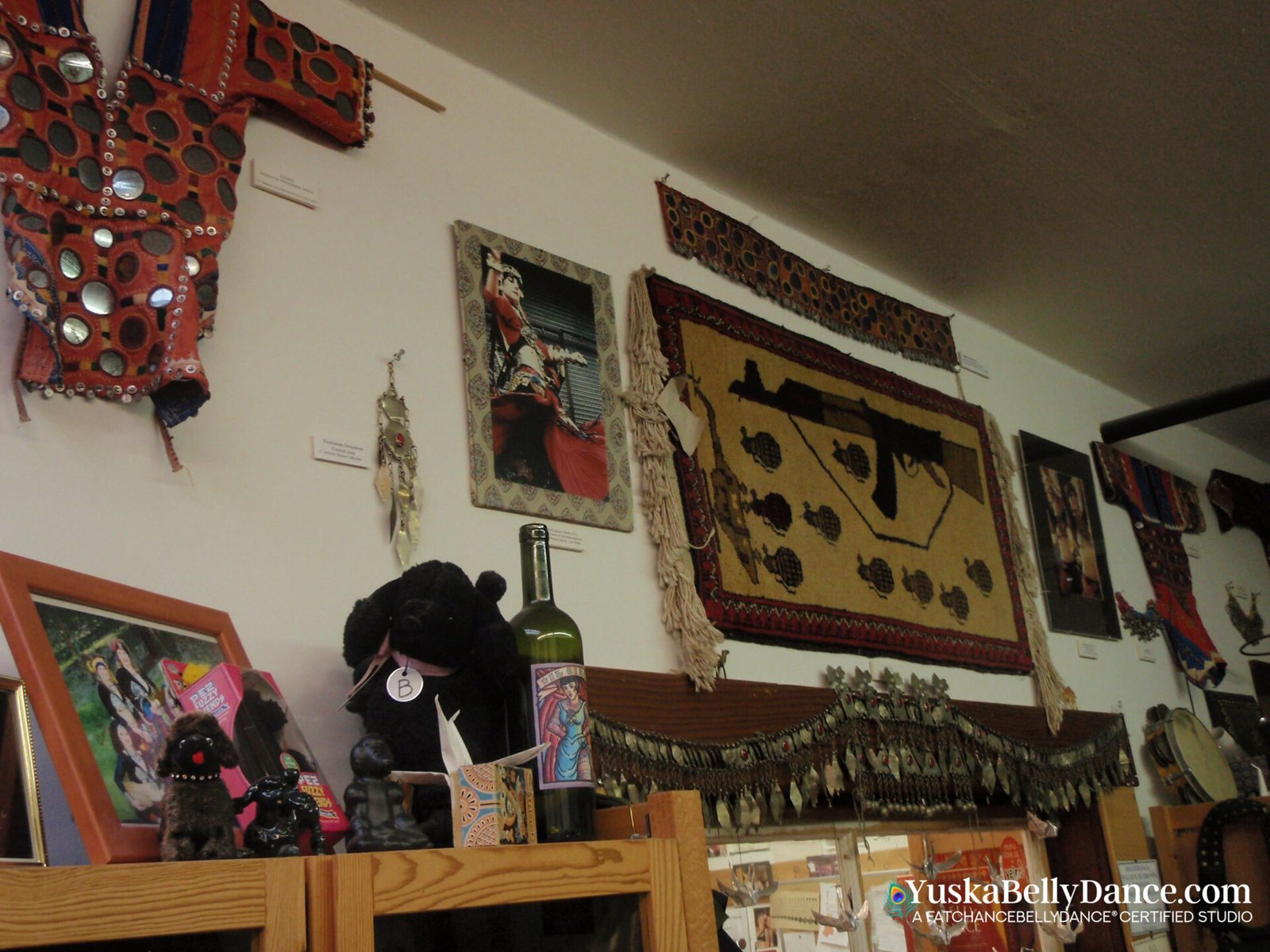
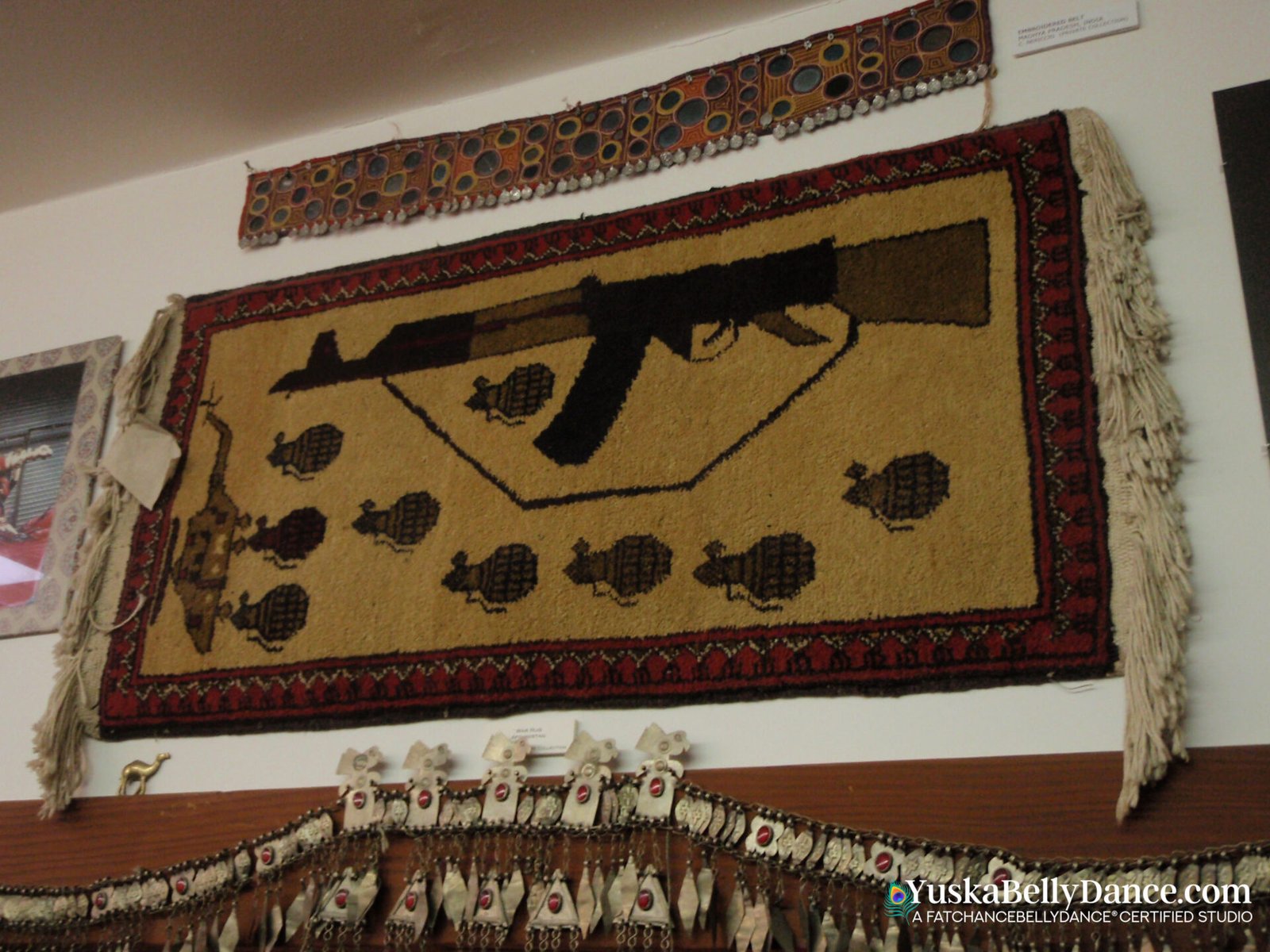
Inside the dance studio, it’s definitely (the statue of) Quan-Yin. For the books, I have to say it’s Africa Adorned (a hard cover book filled with gorgeous pictures of African jewelry, written by Angela Fisher). For the goods… I have to say my War Rug and my first coin bra.
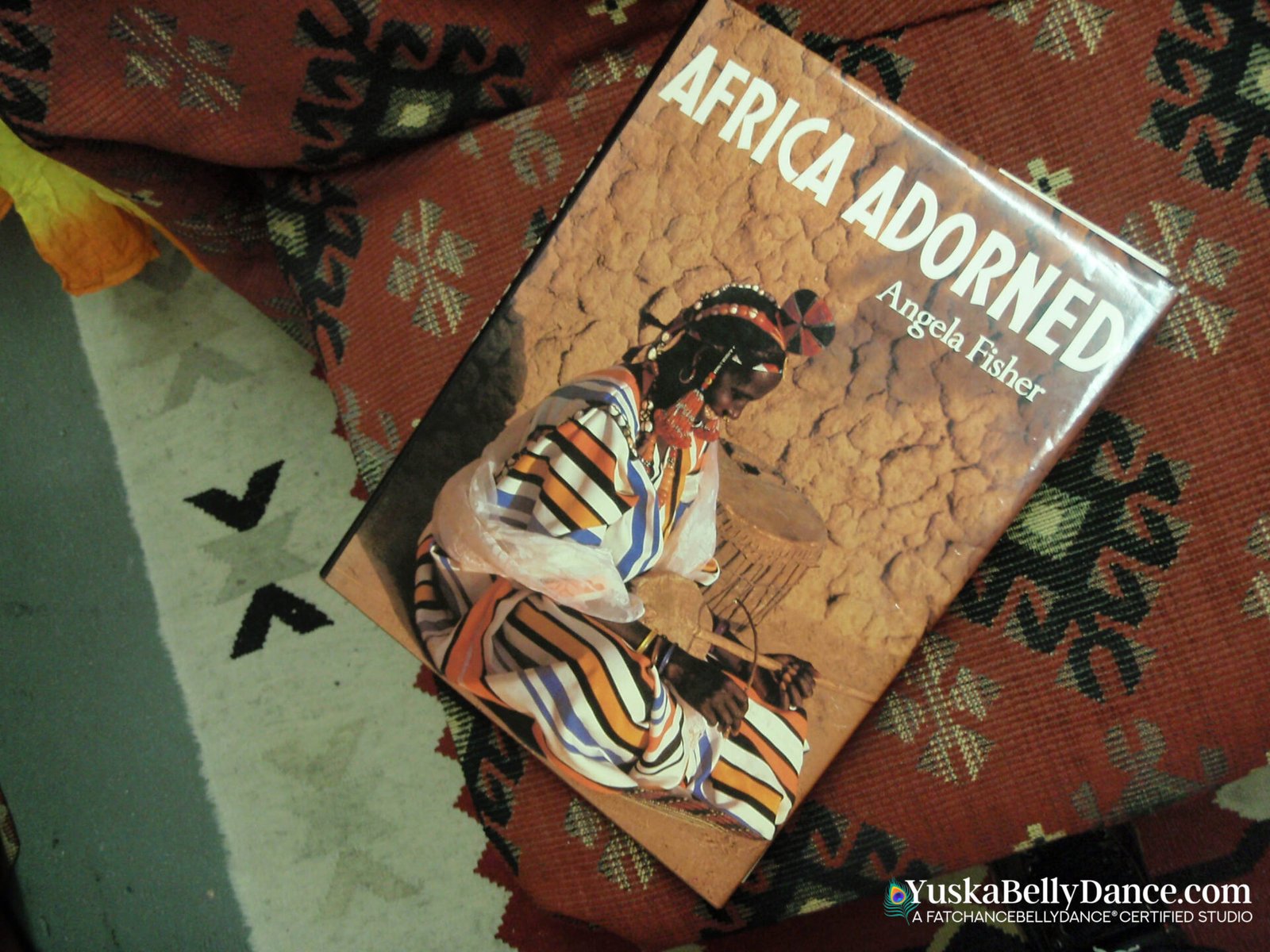
Africa Adorned? Not even the Art of Bellydancing?

(Laughs). Oh, right! My book. I would add the Folkwear Tribal Dancer Pattern as well. I am very proud of that partnership. (The Art of Bellydancing Kit is a starter kit that includes a book written by Carolena Nericcio, a DVD, CD, belly jewel, and zils. The Folkwear Tribal Dancer Pattern was published by Folkwear Patterns and features Carolena’s original costume pieces.)
Alright! Now, to close our interview: what’s the meaning of the matching pinky tattoo that all members of FCBD have?
That one! Well, we were at Cues & Tattoos last year (2010) and Kristine (Adams) suggested we all got matching tattoos… So we did! And to have someone like Kae (Montgomery) who didn’t have a single tattoo on her body to do that (get a tattoo) was a brave thing.
Thank you! That’s the end of our session. I wish you good luck with your endeavors, especially your book! When is it going to be published?
You’re very welcome! Ah, the book! Well, not very soon. Megha is helping me write it, but I suspect not very soon. But if it does get published, you’ll be the first one to know!
Thank you again! I’m looking forward to it!
So there you have it. To be frank, there’re lots to love and talk about with this lady. Her insights are invaluable, and one can learn so much from a short chat with her. I apologize if I hadn’t covered the tidbits that you would have liked to know.
I also apologize for my dorky smile in this photo. I look like a geek posing next to Seven of Nine at a Trekkie convention.

On June 9, 2016, the final FatChanceBellyDance® classes were held at the original location, before moving next door to 672 S. Van Ness. Unfortunately, for various reasons, the new location didn’t last long.
As of this republication (October 25, 2026), the only instructor still teaching FatChanceBellyDance® Style classes in San Francisco is the FCBD® Emerita and my former Taksu Tribal troupe mate, Yuka Sakata. If you’re ever in the Bay Area, please reach out to Yuka. She teaches pure FCBD® Style, and her classes will challenge and improve you. I travel to San Francisco often, and I still take her classes whenever possible.
Photos




Yuska is a certified FCBD® Style instructor whose dance journey spans Jakarta, Tokyo, and the San Francisco Bay Area. After training at FatChanceBellyDance®’s home studio, he now brings his passion for group improvisation, technical precision, and dancing in conversation to the greater Los Angeles area.
Further Resources:
The Essential FCBD® Starter Videos
Watch performance and lecture videos about the past, present, and future of FatChanceBellyDance® Style and decide whether it's the right dance for you.
Read more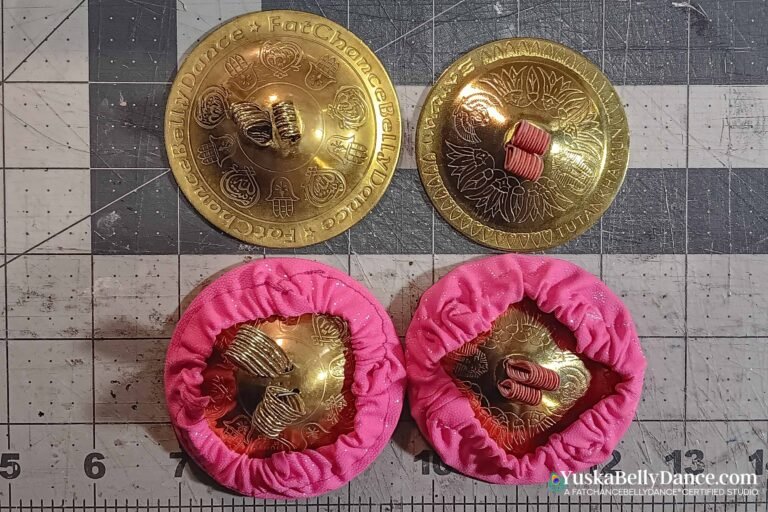
The Quick and Dirty Tutorial for Finger Cymbal Mufflers
Learn the super easy, (almost) idiot-proof way to make finger cymbal mufflers, from your very own mediocre seamster.
Read more
The Bunny Loop: A Different Way to Tie Your Finger Cymbals
This rabbit-ear loop is stays on securely, but is easy to get on and off, perfect for those who like to clean their cymbals frequently.
Read more