
When a stranger switched my Gawharet el Fan finger cymbals with their Turquoise International at 2015 event in Los Angeles, I was devastated. I got my Gawharets in Tokyo, when I took my actual first FatChanceBellyDance® lessons with Joanne Pascual back in 2008. They survived moves throughout continents and cities, countless classes and performances. They helped me through dissolutions of relationships and heartbreaks.
But all was not lost. Years later when I was cleaning the Turquoise International cymbals that aren’t really mine (but I’ve grown to love), I noticed that the previous owner had used a flat hair elastic for the strap. It was rather ingenious. It didn’t require sewing, yet it was durable enough. And so, I began to experiment.
I call this technique the Bunny Loop because the straps look like two rabbit ears sticking up.
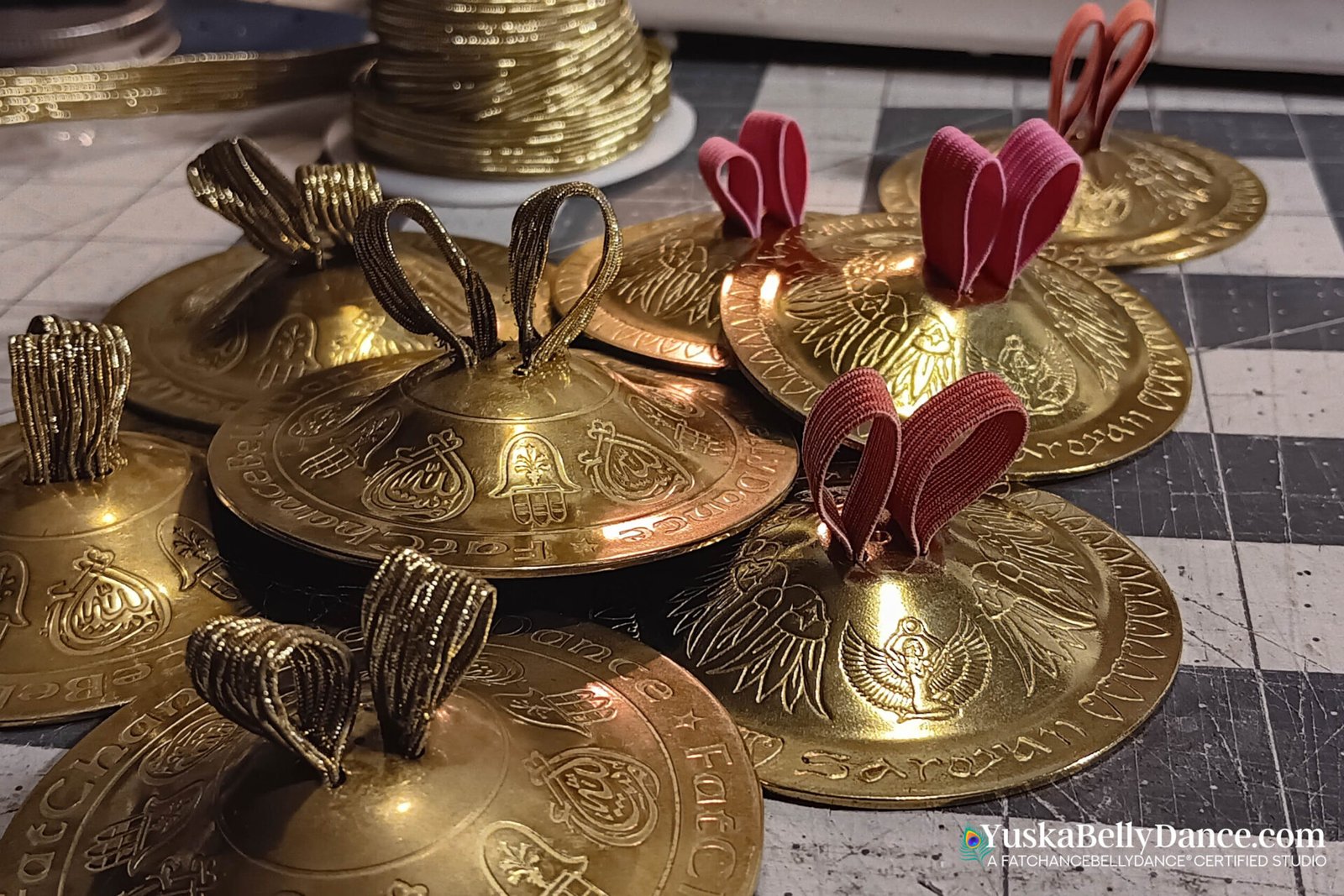
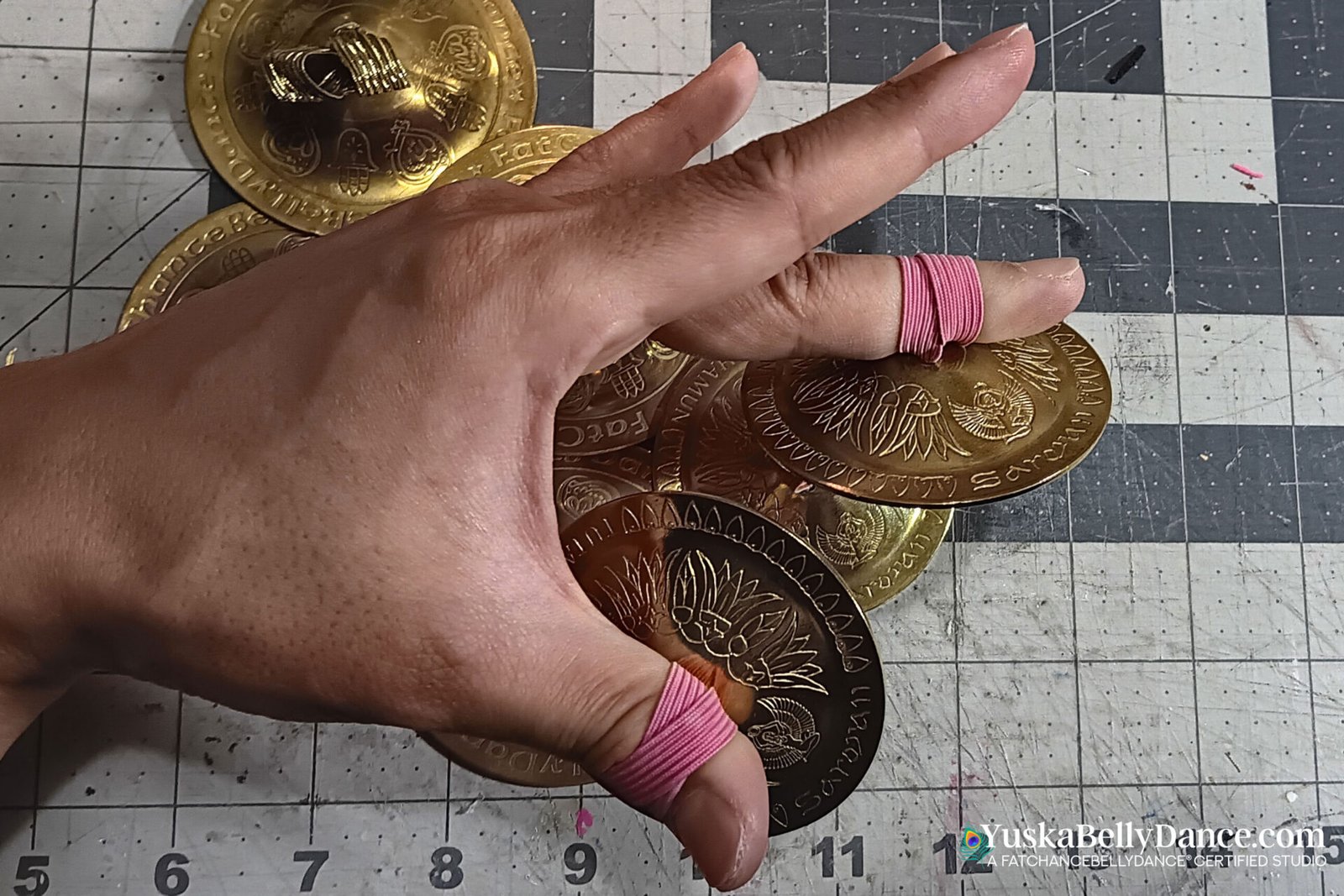
I’ve retired the Turquoise Internationals since owning several Saroyan sets, including the FatChanceBellyDance® cymbals and the Tutankhamuns. In this tutorial, I’ll be using one of the Tuts as a model.

What you’ll need:
- Your finger cymbals
- An elastic that can fit through your finger cymbals’ holes without bunching
- Sequins to help quickly determine which finger your cymbals belong to
- A needle and thread (you can also use a sewing machine)
- A pair of scissors
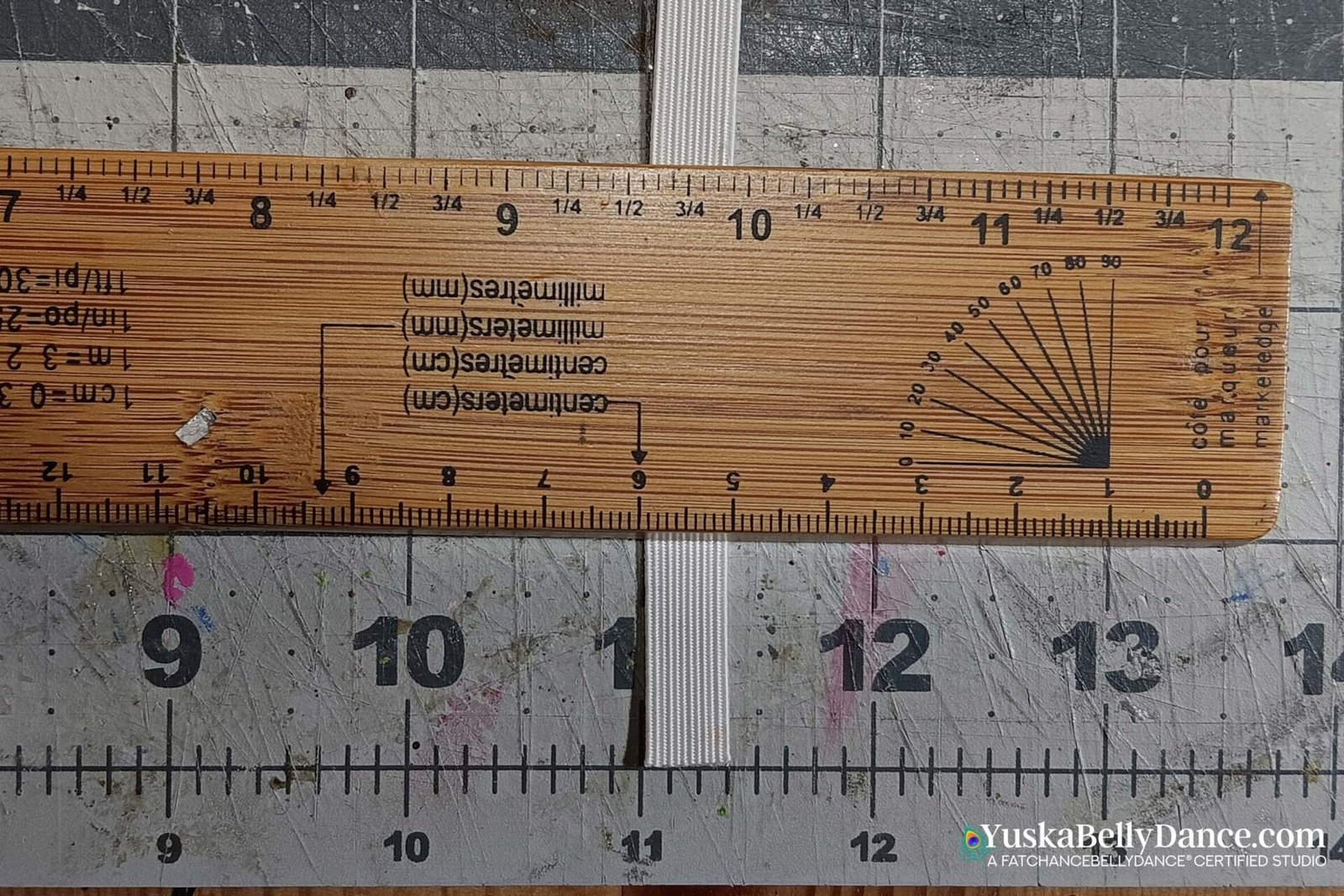
I’ve come to realize that both Saroyan and Turquoise International finger cymbals have around 1 cm (3/8″) wide holes. So, get a flat elastic with that width. A wider elastic that usually comes when you purchase finger cymbals don’t work since you’ll need to loop the elastic band twice through each hole. A wider elastic will bunch up and clog the hole.
The first step is to thread the elastic band from the underside of the finger cymbals, up, down, and up, and down again, as shown in the next photo.

Loop both the straps around your chosen finger (in my case, I’ll use my middle finger). Pull the loose ends on the underside of the finger cymbals to tighten the loop. Keep holding it so you know where to sew, and wiggle your finger free.
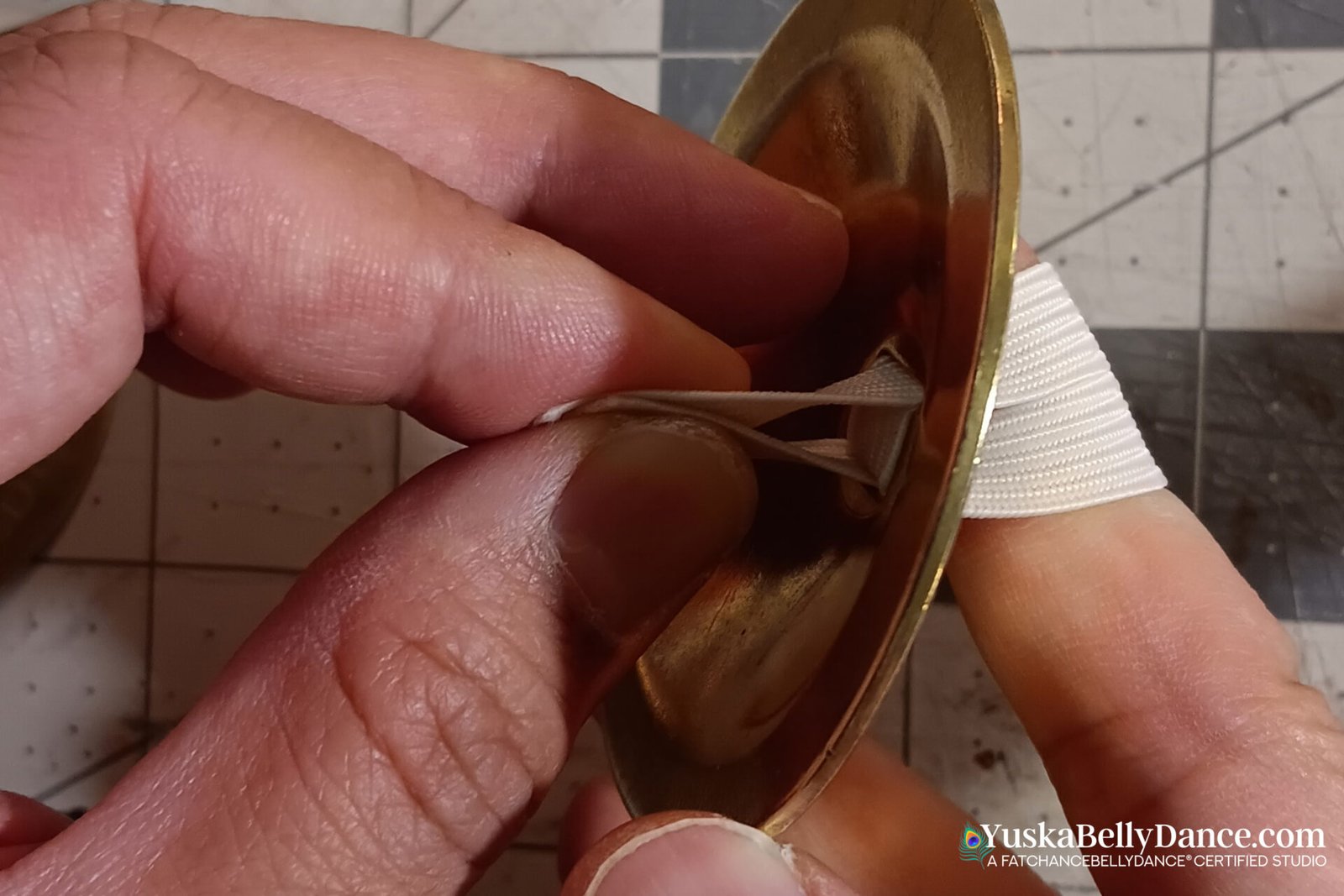
As you hold the two loose ends of the flat elastic, pull them away. The elastic will slide out of the finger cymbals’ holes. Don’t loosen your hold, otherwise you’ll lose the place where you need to sew the elastic. However, keep in mind that one of the advantages of the bunny loop is that they’re relatively easy to get on and off if you want them to, unlike the traditional loop. This means you can adjust as you go.

Use a needle and thread or a sewing machine to stitch the elastic band.
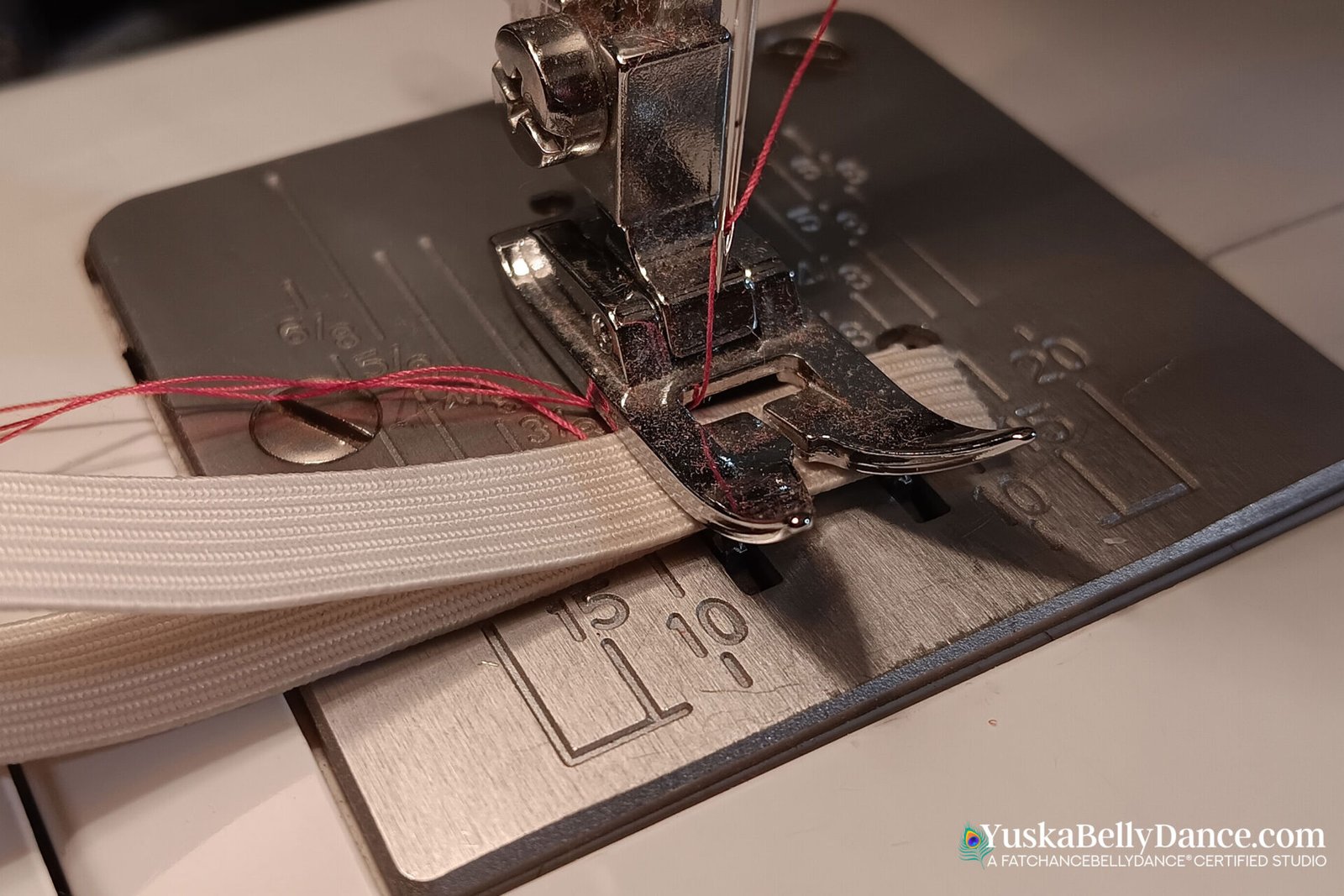
And here’s how it looks like after you’re done. (I actually hand-sewed this because I ran out of spooled bobbin thread, so it’s even wonkier than usual, but I hope you get the idea.)
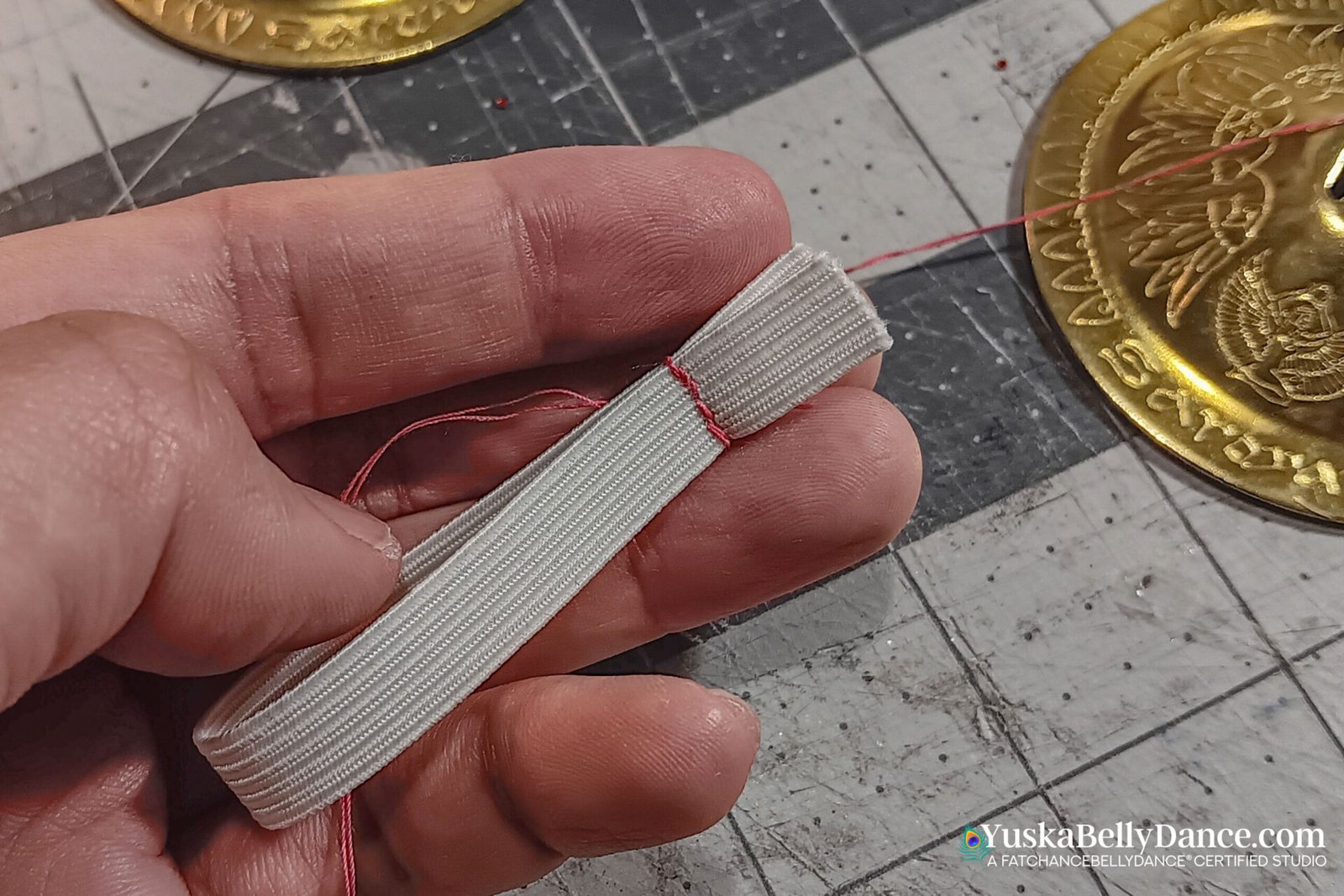
Turn the elastic band inside out so only the clean side of the seam is visible. With the seam in the middle, take both (folded) ends of the elastic band and reloop it through the holes of the finger cymbals. By now, the seam is secure so you can test whether the tightness is to your liking. It’s better to start with a looser grip because then you can adjust and sew rather than taking out the stitches if it’s too tight.
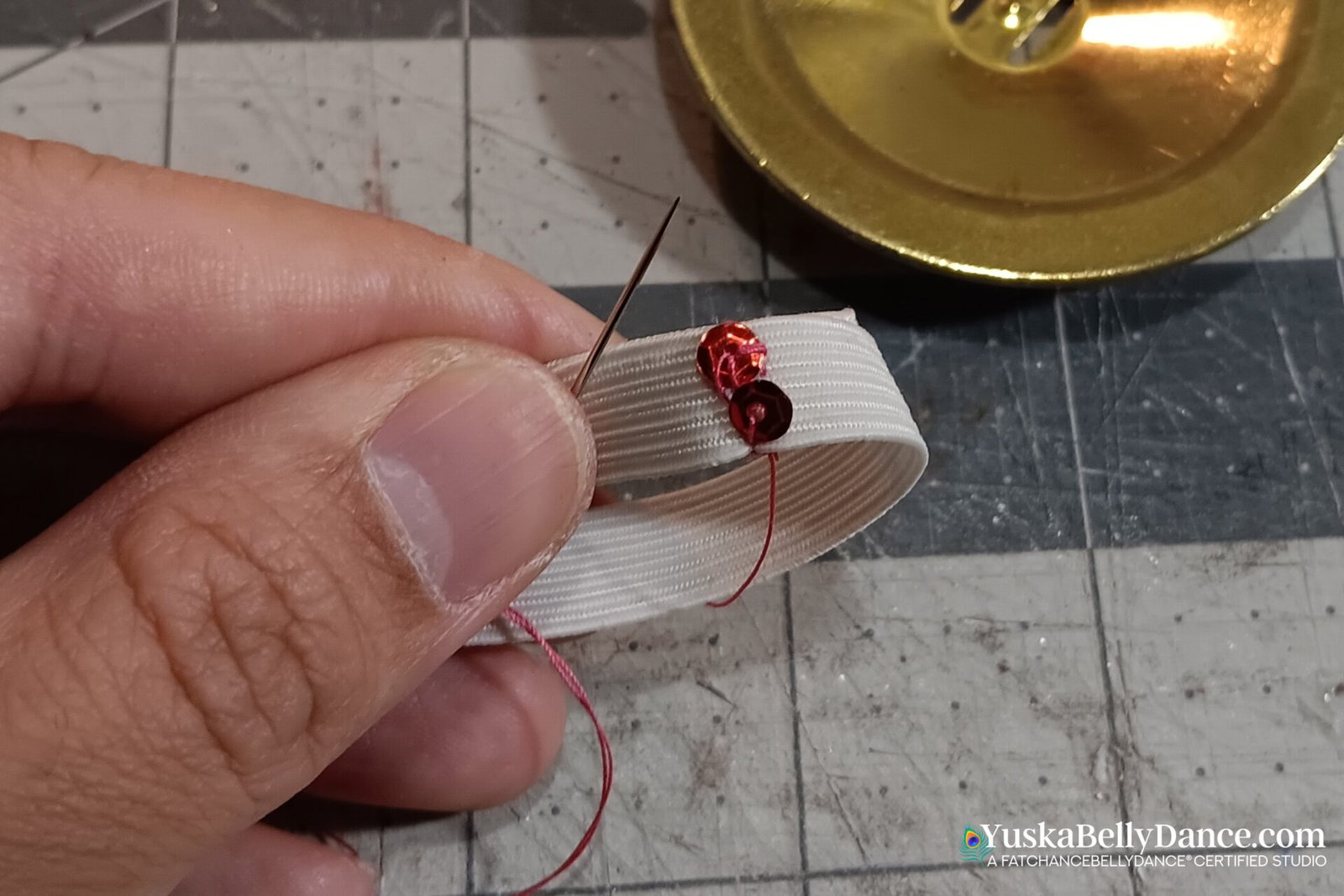
Once you’re happy with the tightness, add the sequins so you know which finger (and hand) the cymbal belongs to. I use two colors of sequins. One color for each hand. One sequin is for the thumb, two for the middle finger. In this example, I sew two red sequins for my right middle finger.
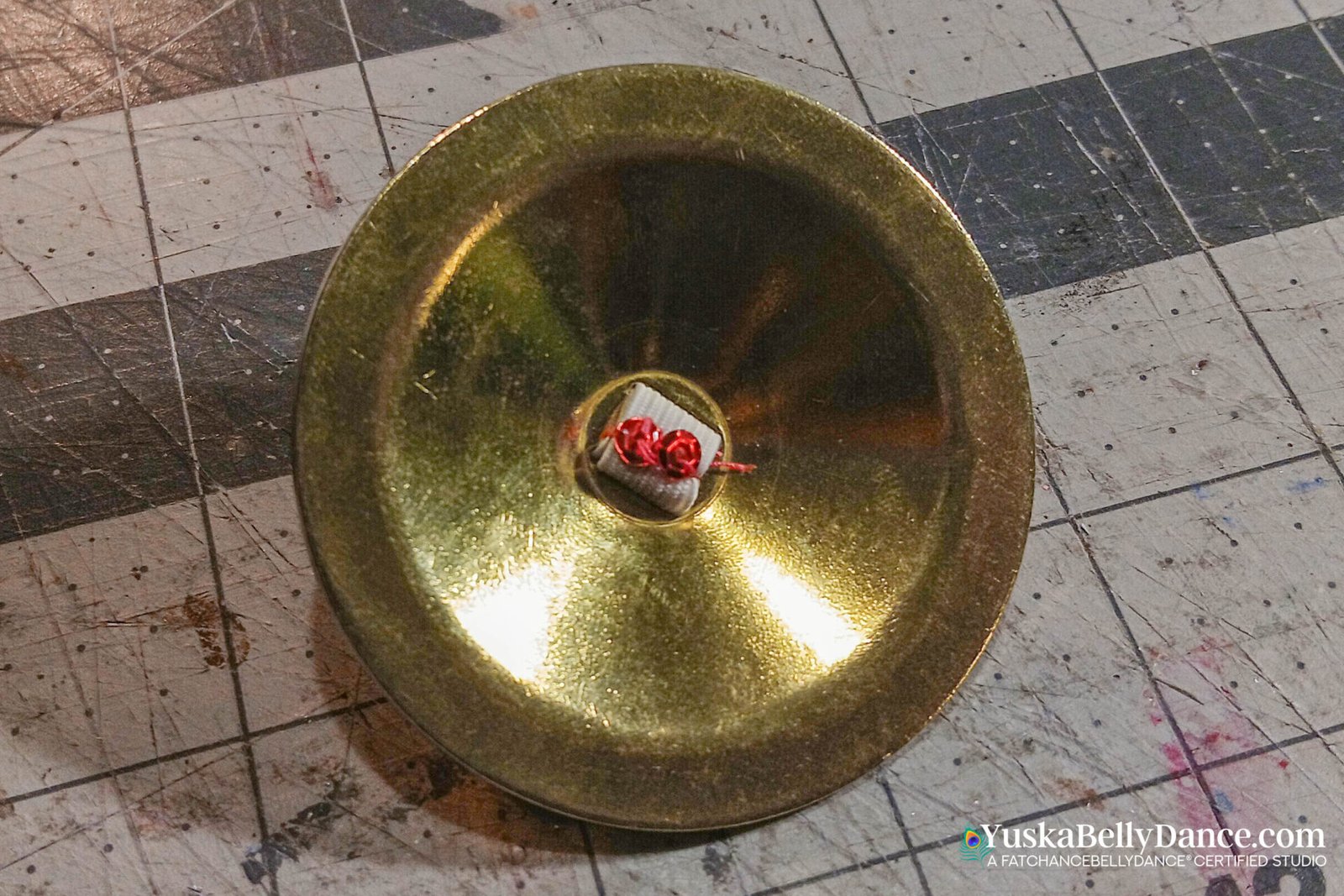
After you’re done, reloop the elastic band through the cymbals’ holes, and you’re done!
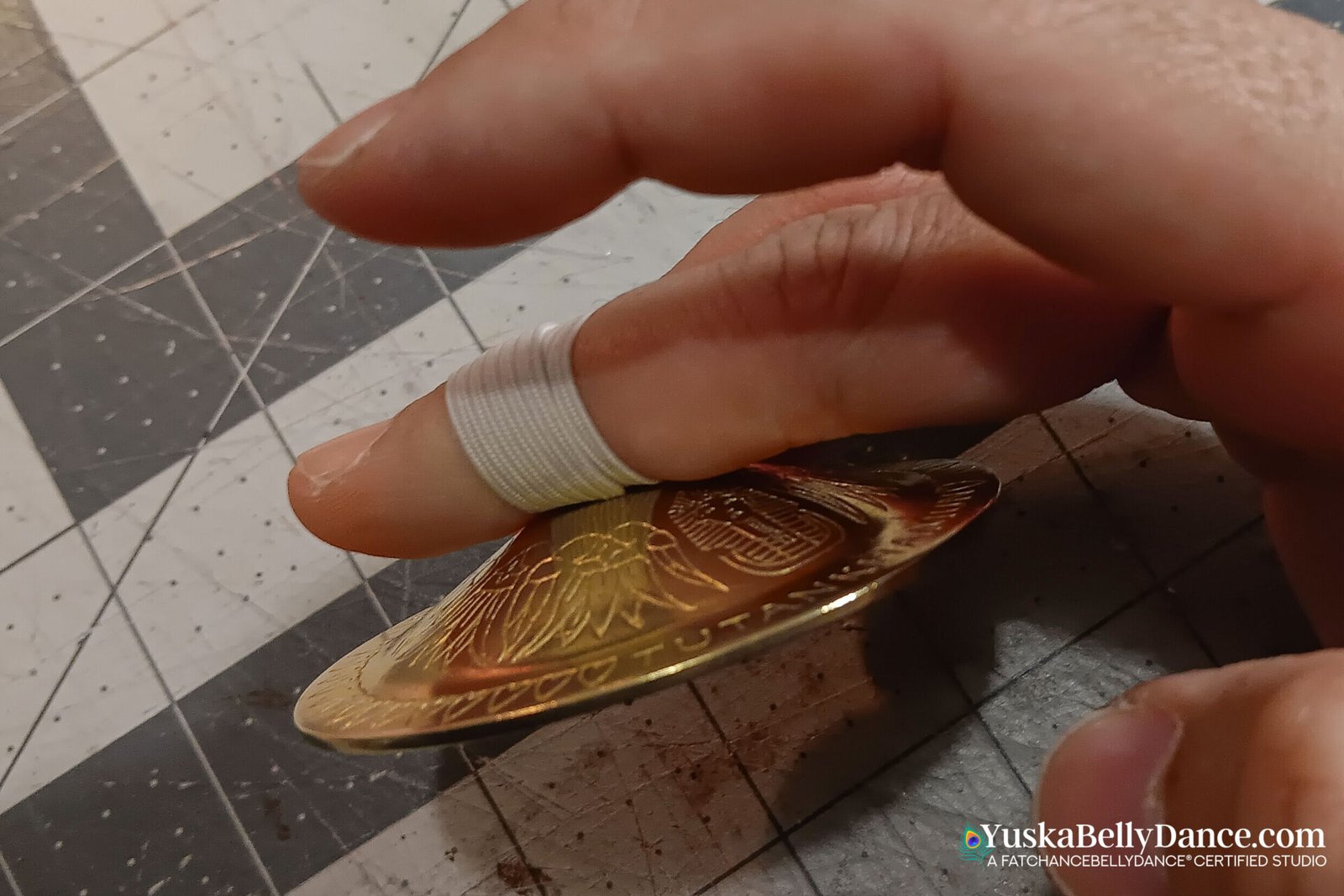
Now you know how to do the Bunny Loop for your finger cymbals!
If you’re like me and you like to give your finger cymbals a spa day from time to time, the Bunny Loop could be a good alternative for the straps because you won’t have to cut and resew (or re-pin) your elastic bands when you take them out to clean the cymbals.
Oh, and they’re just as secure as the traditional, single-loop technique. The only down side is that they can take longer to put on.

Yuska is a certified FCBD® Style instructor whose dance journey spans Jakarta, Tokyo, and the San Francisco Bay Area. After training at FatChanceBellyDance®’s home studio, he now brings his passion for group improvisation, technical precision, and dancing in conversation to the greater Los Angeles area.
Further Resources:
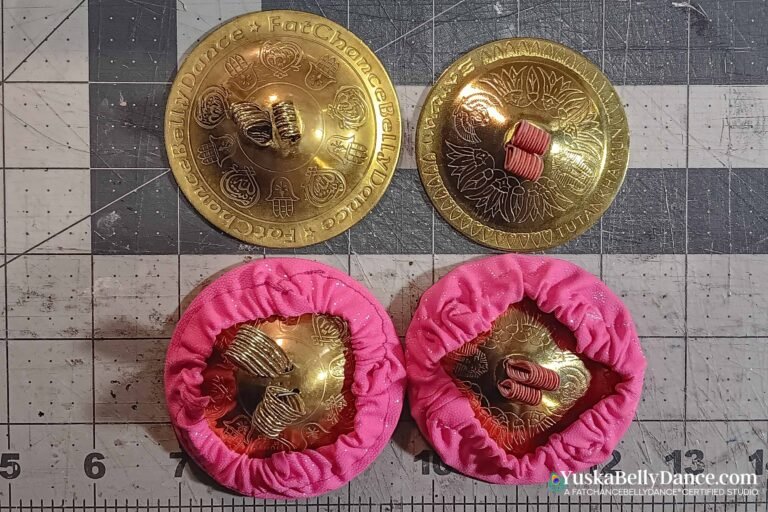
The Quick and Dirty Tutorial for Finger Cymbal Mufflers
Learn the super easy, (almost) idiot-proof way to make finger cymbal mufflers, from your very own mediocre seamster.
Read more
Polishing and Cleaning Your Finger Cymbals
Think of it like treating your trusted set of finger cymbals to a fabulous spa day, complete with a chemical peel, a fizzy bath, and an all-over scrub.
Read more
An Interview with Carolena Nericcio
A reprint of the five-part series, originally published in 2011 on my dance blog, PinkCoinBelt Chronicles.
Read more